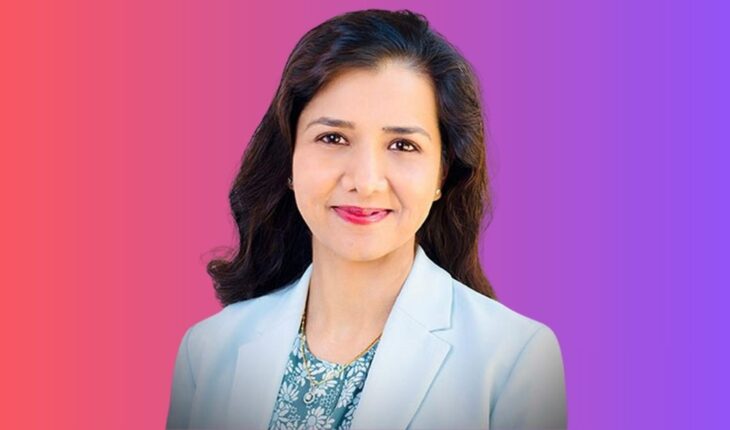
When Mukesh Ambani personally announced Ira Bindra’s appointment as Group President – People & Talent in December 2024, it signalled that Reliance Industries Ltd (RIL) was putting HR at the centre of its next phase.
Senior functional hires at RIL are usually unveiled by business heads; the chairman doing so was unusual — and telling.
Coverage at the time noted that Bindra, then 47, would also become the youngest and the first non-family woman on RIL’s Executive Committee, with a mandate to “drive transformation across the entire organisation”.
By 2025, the bet was paying public dividends. N2Growth’s Leaders40 named Bindra among the world’s top CHROs, a distinction widely reported and amplified on her LinkedIn feed.
It also made Reliance the only Indian company on this year’s list, underscoring the growing heft of its people function as the conglomerate scales across energy, retail, telecoms and new-tech bets.
Bindra arrived from Medtronic (USA), where she served as Head of HR & Vice-President – Global Regions. Her track record — leading large, distributed teams in regulated markets and running transformation programmes — maps neatly onto RIL’s multi-sector complexity.
Indian business dailies framed her arrival as part of Reliance’s professionalisation and succession arc, with HR positioned as the enabler of leadership pipelines, skills modernisation and performance culture.
Her public bios emphasise a business-partner model — board-facing, transformation-led, anchored in leadership development — rather than a narrow personnel remit.
The timing aligns with three currents at Reliance. First, a technology pivot: at the August 2025 AGM, RIL unveiled “Reliance Intelligence”, a deep-tech/AI push that demands large-scale re-skilling, data-literate leadership and new talent architectures — squarely HR terrain.
Second, portfolio reshaping across consumer goods, beauty and retail adjacencies requires agile organisation design, specialist hiring and cross-unit mobility.
Third, succession and governance: as generational transitions advance and investors focus on execution, codifying leadership standards and succession plans becomes a board-level HR deliverable.
In this light, seating a globally seasoned HR leader at the strategy table looks less like a personnel move and more like a capability build for the whole group.
While Reliance has not published a granular HR roadmap, the priorities are clear enough. Leadership and succession: common standards across oil & gas, digital, retail and new ventures, and a deeper bench for P&L and technology roles. Skills transformation: learning pipelines aligned to the AI/data agenda and scalable re-skilling from frontline to leadership.
Operating rhythm and culture: harmonised performance management, recognition and mobility, while preserving unit speed.
Employer brand: converting global awards and leadership hires into a coherent pitch to scarce digital, analytics and engineering talent.
Bindra’s Executive Committee berth matters. True strategy exposure allows HR to shape investment in talent platforms (LMS, internal marketplaces), unify disparate HRIS stacks, and tie capability metrics — time-to-productivity, leadership readiness, skill density — directly to business outcomes.
Media explicitly flagged her EC role at appointment, an unusual prominence for an HR leader and a marker of boardroom proximity.
If 2024–25 was about installing the CHRO and wiring HR into strategy, 2026 should be about delivery: leadership cohorts stepping into P&L roles; measurable re-skilling in AI/data domains; tighter internal mobility across energy, retail and digital; and audit-ready, analytics-rich HR operations that scale with growth.
External scorecards — global rankings, campus offer rates, lateral tech hires — will show whether Reliance can compete at the very top of the talent market.