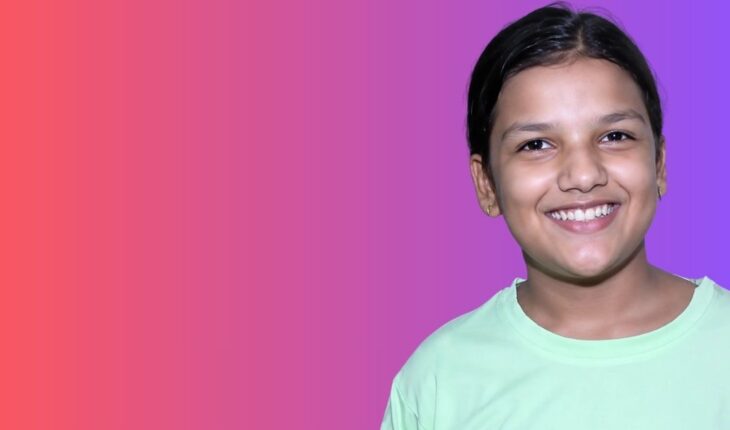
At 14, Mahima Rajput has become part of a larger story: the entry of small-town Indian schoolgirls into global space education. A Class 10 student from Raipur, Chhattisgarh, she has been selected for Mission ShakthiSAT, an international student space programme involving girls from 108 countries. Her selection has drawn attention not only because of her age, but also because the programme gives school students direct exposure to satellite-building and space science.
Mahima’s path to the programme began at school. According to reports, she first heard about ShakthiSAT from her principal and guidance teacher, who helped register her for the initiative. The selection process tested students’ interest in science and mathematics, as well as their logical ability. She later completed a structured training programme with 21 modules and 365 lessons on science, satellites and space missions.
ShakthiSAT is being described as a global effort to train girls in space technology. Its official site says the programme aims to empower 12,000 girls from 108 nations through practical satellite projects and STEM training. Space Kidz India, which is associated with the mission, describes it as an all-girls project focused on advanced lunar surface mapping and resource identification.
For Mahima, the next step is expected to involve practical satellite work. Reports say she will travel to Delhi, where selected students from several countries will work together on satellite-building activities before the mission’s planned launch in October 2026. Some reports say she is expected to go to Delhi on August 23rd 2026 for the next phase of the programme.
What makes Mahima’s achievement notable is that it is more than a symbolic selection. ShakthiSAT is meant to expose students to real space work, including satellite design, construction, operations and scientific learning. By combining theory with practice, the programme gives students a rare chance to see how space missions are planned and built.
The mission also carries a strong message about gender. Space education in India has often celebrated high achievers only after they reach elite institutions. Programmes such as ShakthiSAT try to move that starting point much earlier. By involving schoolgirls in satellite projects, they make science, engineering and space exploration seem reachable while students are still in school. Mahima’s selection therefore matters beyond one student’s success. It may help other girls imagine themselves in science before hesitation, social pressure or lack of exposure narrows their choices.
The pride in Chhattisgarh is easy to understand. Mahima’s story shows how much access, mentoring and early encouragement can matter. Her school’s role in identifying the opportunity and registering her for it is a reminder that teachers and principals can be gateways to national and international platforms. In smaller cities, that role is especially important. Many students have talent, but not always the information or confidence needed to apply.
There is a broader Indian context, too. The country’s space sector is expanding, and student-led satellite programmes are becoming part of a wider effort to build scientific curiosity. ShakthiSAT’s global scale gives Mahima a platform that goes beyond classroom achievement. She will learn from experts and work with students from other countries, an experience that could shape her understanding of collaboration, innovation and problem-solving.
Mahima Rajput’s journey is still at an early stage. The real test will be how she uses this opportunity, how much support she receives and whether such programmes continue to reach students beyond the usual metropolitan circles. For now, her selection is a bright and encouraging moment. A Class 10 student from Raipur joining a 108-nation space mission is the kind of story that can inspire many more children, especially girls, to see science not as a distant subject, but as a path they can follow.
Would you like to feature yourself or someone you know on Person Matters, a leading profile-based news portal? Write to us at info@personmatters.com