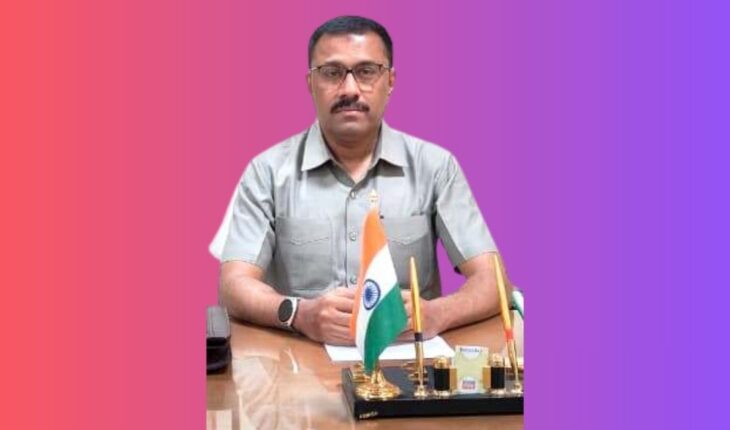
One of India’s foremost repositories of manuscripts and Islamic intellectual heritage has chosen an Urdu scholar to lead its next chapter. On June 1, 2026, Professor Md. Zahidul Haque assumed charge as director of the Khuda Bakhsh Oriental Public Library in Patna. His appointment marks an important moment for an institution that has long stood at the intersection of scholarship, culture and history.
For Haque, the role is the culmination of a distinguished academic journey rooted in Urdu literature, research and teaching. Born on June 26, 1977, in Bihar’s Araria district, he pursued higher studies at Aligarh Muslim University before earning his M.A., M.Phil. and Ph.D. in Urdu from Jawaharlal Nehru University (JNU), New Delhi. During his years as a researcher, he received both Junior and Senior Research Fellowships from the University Grants Commission, underscoring his early promise as a scholar.
Before taking up his new responsibilities, Haque served in the Department of Urdu at the University of Hyderabad, where he established himself as a teacher, researcher and literary critic. His academic work has focused on classical Urdu poetry, literary criticism and the sociological study of literature. Over the years, he has supervised doctoral and M.Phil. research, published widely, and presented papers at national and international conferences.
Scholarship has been only one part of Haque’s engagement with Urdu literature. He is also known in literary circles as a poet. He began writing ghazals in his teenage years and gradually emerged as a recognised literary voice. His poetry has appeared in a range of Urdu journals, magazines and newspapers, while his participation in national and international mushairas has strengthened his standing within the Urdu-speaking intellectual community.
His scholarly interests are reflected in several published works, including Inamullah Khan Yaqeen: Ahad aur Shaeri, Bisaat-e-Naqd, Baig Ehsas: Fikr, Fan aur Shakhsiyat and Pas-e-Arz-e-Hunar. Together, these works demonstrate a sustained engagement with literary criticism, intellectual history and Urdu scholarship. In recognition of his contribution to literary research, he received the Imdad Imam Asar Research Award from the Bihar Urdu Academy.
The breadth of that experience will now be applied to an institution of exceptional significance. Founded in 1891 by Khuda Bakhsh Khan, the Khuda Bakhsh Oriental Public Library houses more than 21,000 manuscripts alongside a vast collection of books, journals and archival materials. Renowned for its rare Persian, Arabic and Urdu holdings, it has long attracted scholars from across the world. The library was declared an Institution of National Importance by an Act of Parliament in 1969 and today functions under the Ministry of Culture.
Haque takes charge at a time when libraries worldwide face the twin challenges of preservation and accessibility. The growing demand for digitisation, online access to manuscripts and wider public engagement has transformed the responsibilities of cultural institutions. His grounding in both classical texts and contemporary scholarship may help him meet those challenges while preserving the library’s scholarly character.
For Bihar, the appointment carries added significance. A scholar born in the state has returned to lead one of its most celebrated intellectual institutions. At a time when discussions about libraries often centre on budgets and infrastructure, his elevation also highlights the enduring importance of scholarship, language and cultural preservation.
Through research, teaching, poetry and now institutional leadership, Professor Zahidul Haque has remained deeply engaged with the world of ideas. As he begins his tenure at the Khuda Bakhsh Oriental Public Library, expectations are high that he will strengthen its role as a centre of scholarship, manuscript preservation and cultural dialogue. His appointment is not merely a personal achievement; it is also a reminder of the enduring relevance of India’s literary and intellectual traditions in the digital age.