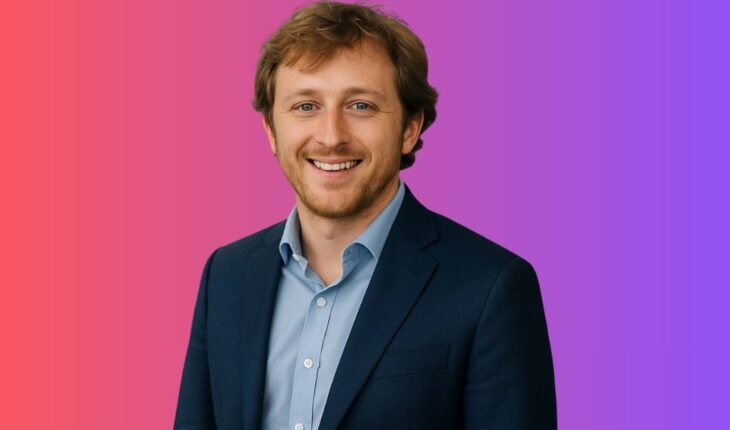
Andrew Tulloch is a well-known AI engineer and researcher whose career has spanned some of the most influential companies and technologies in machine learning.
He is best recognised for his work on large-scale ML systems and contributions to PyTorch during a long tenure at Meta (formerly Facebook). In 2025, Tulloch returned to Meta after co-founding Thinking Machines Lab alongside former OpenAI Chief Technology Officer Mira Murati — a move that has drawn widespread attention amid the industry’s ongoing race to secure top AI talent.
Tulloch’s association with Meta began around 2012, marking the start of an 11-year stretch during which he worked on large-scale machine learning infrastructure.
He played a central role in the development and advancement of PyTorch, Meta’s open-source deep learning framework, which is now widely used across academia and industry. Profiles from that period credit him as one of the platform’s key technical architects.
In late 2023, Tulloch left Meta and joined OpenAI as a Member of Technical Staff, focusing on training infrastructure for frontier models.
Though OpenAI has not officially commented, his public GitHub profile includes “@openai” and several associated repositories, lending support to multiple reports placing him at the organisation prior to his next venture.
In early 2025, Tulloch co-founded Thinking Machines Lab with Mira Murati. The new company quickly gained visibility as one of the most closely watched AI startups of the year, thanks to the founders’ pedigrees and the intense investor and media interest in frontier AI innovation.
However, on 11 October 2025, multiple outlets including The Wall Street Journal reported that Tulloch had left the startup and rejoined Meta. The company confirmed his departure, and the move was widely interpreted as part of Meta’s ongoing effort to recruit leading AI engineers.
Tulloch’s return to Meta came against the backdrop of widely reported speculation about compensation.
In August 2025, Indian and Australian media, citing The Wall Street Journal, claimed that Meta CEO Mark Zuckerberg had offered Tulloch between $1bn and $1.5bn over several years to lure him back. Meta’s communications team strongly rejected the reported figures, calling them “inaccurate and ridiculous.”
Nevertheless, the episode underscored Tulloch’s symbolic role in what has been described as a “talent war” in AI — highlighting the extraordinary lengths major firms are willing to go to retain or reacquire elite engineering talent.
Technically, Tulloch remains closely associated with scalable machine learning infrastructure and distributed training systems.
His GitHub and personal website showcase ongoing work on “big learning” methods, including distributed and parallelised approaches to training large models.
His experience at Meta, OpenAI, and his own startup reflect a deep grounding in both foundational systems and cutting-edge applications — expertise that remains rare and highly sought-after.
Tulloch is believed to have been born in Australia and is reported to have studied at the University of Sydney and the University of Cambridge. Before entering the world of AI full-time, he reportedly worked in finance at Goldman Sachs.
These details — frequently mentioned in press summaries — should be verified directly through his public profiles for formal use.
Timeline
- 2012–2023: Meta — machine learning infrastructure and PyTorch development.
- October 2023: Leaves Meta; joins OpenAI as Member of Technical Staff.
- Early 2025: Co-founds Thinking Machines Lab with Mira Murati.
- August 2025: Reports emerge of a large compensation offer from Meta; company denies accuracy of the numbers.
- 11 October 2025: Leaves Thinking Machines Lab to rejoin Meta.
Why he matters
Andrew Tulloch occupies a rare space at the intersection of frontier-model training and production-grade ML infrastructure.
His career path — spanning Meta, OpenAI, a startup venture, and back to Meta — reflects broader shifts in the AI sector, where those with deep infrastructure expertise are both scarce and strategically vital. His movements are closely watched not only for what they reveal about company strategies but also for what they signal about where technical talent sees the best opportunity to build.