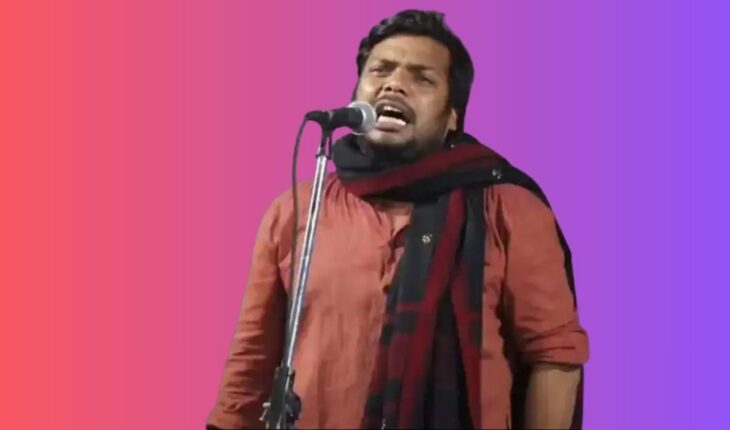
Dhananjay, a PhD scholar from Gaya, Bihar, rose to national prominence in March 2024 when he was elected President of the Jawaharlal Nehru University Students’ Union (JNUSU) as part of the Left Unity panel.
His election made headlines not just for its scale — defeating the ABVP candidate by 922 votes — but for its historic significance: Dhananjay became JNU’s first Dalit student union president since 1996.
Held after a four-year gap, the election saw a remarkable 73% turnout, the highest in over a decade, and resulted in a 4–0 sweep for the Left across all key union posts.
A student in JNU’s School of Arts and Aesthetics, with a focus on theatre and performance studies, Dhananjay contested the elections as the nominee of the All India Students’ Association (AISA), part of the United Left slate that included SFI, DSF, and AISF.
Following the results, AISA credited him as the lead vote-getter and emphasised his agenda — focused on student rights, campus safety, scholarships, and infrastructure — as a rejection of “hate politics.”
His personal journey, from rural Bihar to one of India’s most elite universities, has been chronicled in several long-form features. These stories underline the barriers he overcame as a Dalit and first-generation learner, and frame his rise as a significant moment in higher education’s representational politics.
During his tenure and beyond, JNU remained a site of ideological contest, with the students’ union frequently in the spotlight. Disputes over symbolism — such as the display of a Savarkar portrait — kept the central panel, including Dhananjay, under scrutiny through 2024 and into 2025.
In October 2025, Dhananjay formally entered electoral politics. The CPI(ML) Liberation announced him as its candidate from the Bhore (SC) constituency in Bihar, contesting as part of the INDIA/Mahagathbandhan alliance.
Reports confirmed his candidature, supported by disclosures on the election transparency platform MyNeta, listing him as a theatre studies researcher and former JNUSU president now making his political debut.
Dhananjay’s messaging has remained consistent across platforms. As JNUSU president, he championed issues such as fellowship hikes, women’s safety, and anti-discrimination efforts — priorities that now inform his Assembly campaign.
The CPI(ML)’s Bihar strategy has positioned him among a younger, activist-oriented cohort of candidates, focusing on employment, agrarian justice, and social equity.
He is now widely seen as a test case for whether post-campus credibility can translate into electoral viability — especially in a reserved constituency like Bhore, which witnessed narrow margins in the 2020 Assembly race. Dhananjay’s trajectory reflects a larger pipeline from student politics to mass electoral contestation, a model the Indian Left has long embraced to renew its grassroots leadership.