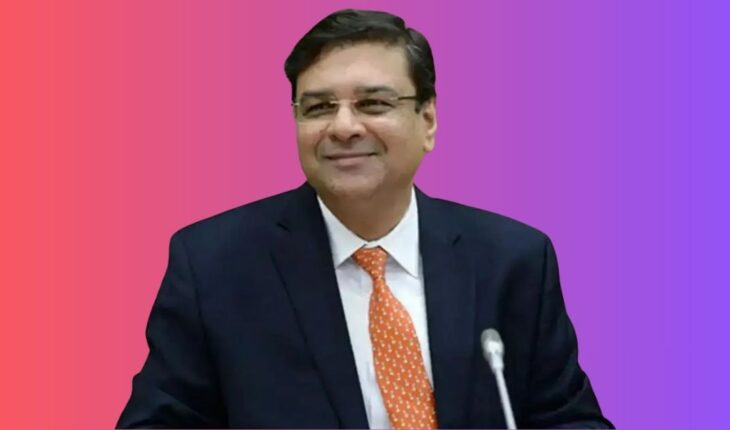
The Government of India has appointed Dr Urjit R. Patel — the 24th Governor of the Reserve Bank of India (RBI) — as India’s Executive Director (ED) at the International Monetary Fund (IMF) for a three-year term. He succeeds K.V. Subramanian and will represent the four-country constituency of India, Bangladesh, Bhutan and Sri Lanka on the IMF’s 25-member Executive Board.
What the ED role entails
IMF Executive Directors oversee the Fund’s day-to-day business, shaping country programmes, surveillance, and policy papers. India’s chair groups the voting power of India, Bangladesh, Bhutan and Sri Lanka for Board decisions.
A career that comes full circle
Patel began his professional career at the IMF in Washington in 1990, working on the U.S., India, Bahamas and Myanmar desks, before a deputation to the RBI. He holds a PhD in economics from Yale University, an MPhil from Oxford, and an undergraduate degree in economics from the University of London. Beyond central banking, he alternated between public policy and the private sector, including a stint as President (Business Development) at Reliance Industries (2008–09), and senior roles across infrastructure and finance, before returning to the RBI as Deputy Governor in 2013.
RBI governorship (2016–2018)
Appointed Governor in September 2016, Patel led the RBI through a volatile period that included the November 2016 demonetisation and the formal adoption of inflation targeting via a statutory Monetary Policy Committee. He resigned in December 2018 citing personal reasons amid a widely reported debate over central-bank autonomy.
The “Urjit Patel Committee” legacy
As chair of the 2014 Expert Committee to Revise and Strengthen the Monetary Policy Framework, Patel recommended flexible inflation targeting with a 4% CPI goal and a ±2% tolerance band. Those proposals shaped the 2016 legal framework and remain the anchor as India reviews its inflation target ahead of April 2026.
Post-RBI assignments
After leaving the RBI, Patel became Chairman of the National Institute of Public Finance and Policy (NIPFP) in June 2020. He later served as Vice-President (Investment Operations, Region 1) at the Asian Infrastructure Investment Bank from early 2022 until his resignation took effect in January 2024. He has also joined corporate boards as an independent director, including at Britannia Industries.
The road back to Washington
Patel’s appointment follows changes in India’s IMF representation. The Appointments Committee of the Cabinet ended K.V. Subramanian’s tenure effective 30 April 2025, with interim arrangements in place before Patel’s selection was announced on 29 August 2025.
What he brings to the IMF seat
Credibility on inflation rules. As the architect of India’s inflation-targeting blueprint and a former MPC chair, Patel arrives as New Delhi consults on whether to retain the 4% CPI target and ±2% band beyond March 2026.
Crisis and banking-sector perspective. His 2020 book Overdraft: Saving the Indian Saver analyses India’s bad-loan cycle and regulatory lessons — useful for IMF debates on financial stability and sovereign–bank linkages in emerging markets.
Multilateral investment experience. His AIIB portfolio experience across South Asia, Southeast Asia and the Pacific adds operational insight on infrastructure finance, climate-related investment and project governance — areas that increasingly intersect with IMF work via facilities such as the Resilience and Sustainability Trust.
Key milestones at a glance
- IMF ED (India constituency): Appointed 29 August 2025 for three years; succeeds K.V. Subramanian.
- Constituency composition: India, Bangladesh, Bhutan and Sri Lanka; Board has 25 Directors.
- RBI Governor: September 2016-December 2018; resigned citing personal reasons.
- Inflation targeting architect: Chaired 2014 committee recommending a 4% CPI target (±2% band); framework adopted in 2016, under review before April 2026.
- NIPFP Chair: Assumed charge on 22 June 2020.
- AIIB Vice-President (Investment Operations, Region 1): 11 January 2022-31 January 2024.
- Education and early IMF stint: PhD (Yale), MPhil (Oxford), BSc (London); IMF economist from 1990.
Book:Overdraft: Saving the Indian Saver (HarperCollins, 2020).