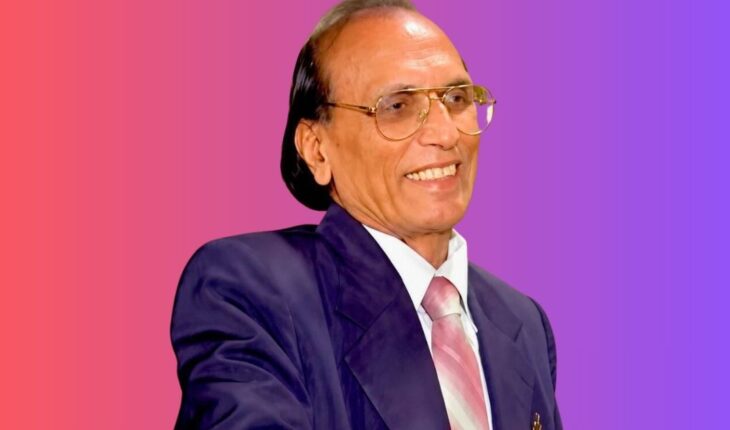
Bashir Badr, one of the most beloved voices in modern Urdu poetry, died at the age of 91, bringing to a close a literary career that spanned more than six decades. Revered across generations for his accessible yet profound ghazals, Badr transformed Urdu poetry from an elite literary pursuit into a language of shared human experience. He passed away at his residence in Bhopal after a prolonged illness, leaving behind a body of work that remains among the most quoted in contemporary South Asian culture.
Born in Ayodhya in 1935, Badr developed a passion for poetry at an early age. That interest eventually led him to study Urdu literature at Aligarh Muslim University, where he refined the literary voice that would later captivate audiences across the subcontinent. His career flourished through mushairas, where his confident stage presence and conversational style made him a star attraction. Unlike many of his contemporaries, Badr wrote in a language that ordinary people could immediately relate to, blending romance, longing, humour and reflection into verses that found a place in everyday conversation.
If there was a hallmark of Badr’s poetry, it was his gift for expressing profound emotions in deceptively simple language. His work explored love, separation, memory and human relationships without sacrificing depth or accessibility. Many of his couplets entered popular culture and continue to be quoted in political speeches, films, social media posts and personal conversations. His influence extended far beyond literary circles, making him one of the most recognisable voices in modern Urdu poetry.
His life, however, was not untouched by tragedy. During the 1987 Meerut riots, he lost his home and much of his personal library. Yet rather than allowing bitterness to shape his work, Badr continued to write with empathy and restraint. Critics often observed that even after suffering profound personal loss, his poetry remained rooted in humanism rather than anger.
Despite such setbacks, public recognition continued to grow. Over the course of his career, he received the Padma Shri, the Sahitya Akademi Award and numerous other honours. His collections of ghazals and literary criticism also helped shape the study and appreciation of Urdu poetry in post-independence India.
In his final years, Badr largely withdrew from public life as declining health and dementia affected his memory. Those close to him often reflected on the poignant contrast between a poet celebrated for unforgettable verses and a man gradually losing the memories attached to them. Yet while his memory faded, his poetry remained firmly embedded in the public imagination.
The tributes that followed his death reflected the breadth of his influence. Literary gatherings across India celebrated his legacy, while the Madhya Pradesh government announced a literary award in his name to encourage future generations of Urdu writers.
Bashir Badr’s greatest achievement was not merely writing memorable poetry. He gave ordinary emotions extraordinary expression. In doing so, he ensured that long after his voice has fallen silent, his words will continue to accompany generations of readers through love, loss, hope and remembrance.