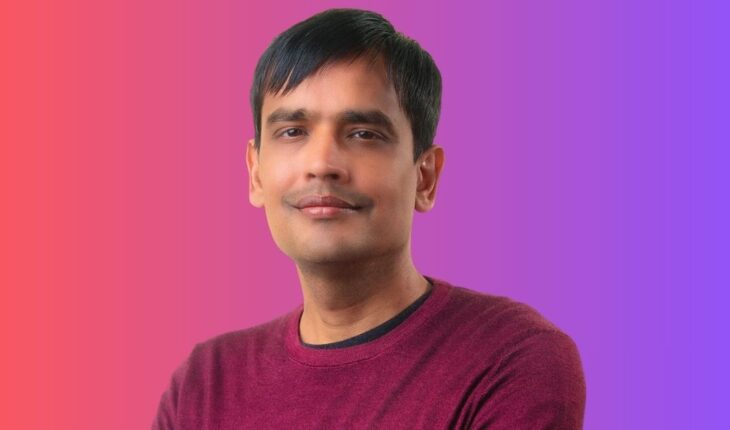
In a defining phase of the artificial-intelligence boom, few leaders have operated as quietly — or as consequentially — as Srinivas Narayanan. As chief technology officer of B2B applications at OpenAI, he helped turn cutting-edge research into tools that businesses could use at scale.
Narayanan has now announced his departure after nearly three years, bringing to a close a tenure that overlapped with OpenAI’s shift from a research lab to a global commercial force.
From IIT Madras to Silicon Valley
An alumnus of Indian Institute of Technology Madras, Narayanan began his career in computer science before moving to the United States for a master’s degree at the University of Wisconsin–Madison.
He spent more than a decade at Meta Platforms, rising to vice-president of engineering. There he led large-scale artificial-intelligence and applied-research efforts during the firm’s years of rapid growth.
Earlier roles at IBM and Tavant Technologies, along with a stint co-founding a start-up focused on social-collaboration tools, rounded out a career rooted in both enterprise systems and product development.
Building OpenAI’s business engine
Narayanan joined OpenAI in April 2023 as vice-president of engineering, just as generative AI began to enter the mainstream. In September 2025 he was promoted to chief technology officer of B2B applications, placing him at the centre of the firm’s enterprise push.
He led teams responsible for turning research into products — among them enterprise features for ChatGPT, the company’s developer API ecosystem and the infrastructure needed to run AI systems at scale.
His role went beyond building tools. It involved making artificial intelligence usable, reliable and commercially viable for businesses.
Architect of a platform strategy
Narayanan has argued that the future of AI lies not only in better models, but in stronger platforms. At OpenAI he focused on building an ecosystem in which developers and firms could create, distribute and monetise AI applications.
Under his watch, the company deepened its reach in enterprise AI, serving start-ups, large firms and governments while scaling systems to support millions of users.
He was also closely associated with OpenAI’s expansion in India, one of its fastest-growing markets, where a large developer base has driven adoption.
A quiet exit at a critical moment
In April 2026 Narayanan said he would step down, citing personal reasons and a wish to spend time with his ageing parents in India before deciding his next move.
His departure comes as OpenAI reshapes its leadership and expands its applications business. That makes his exit notable, even if it has been handled without fanfare.
Reflecting on his time at the firm, he described it as “an incredible journey”, marked by rapid product launches and advances in artificial intelligence.
The bigger picture
Narayanan’s career mirrors a wider shift in technology: from research to deployment. OpenAI’s early years were defined by breakthroughs in models. Its next phase has depended on turning those advances into systems that businesses can use.
Leaders like Narayanan have helped bridge that gap. As competition in artificial intelligence intensifies, his next move will draw attention — not just as a career step, but as a sign of where enterprise AI may go next.