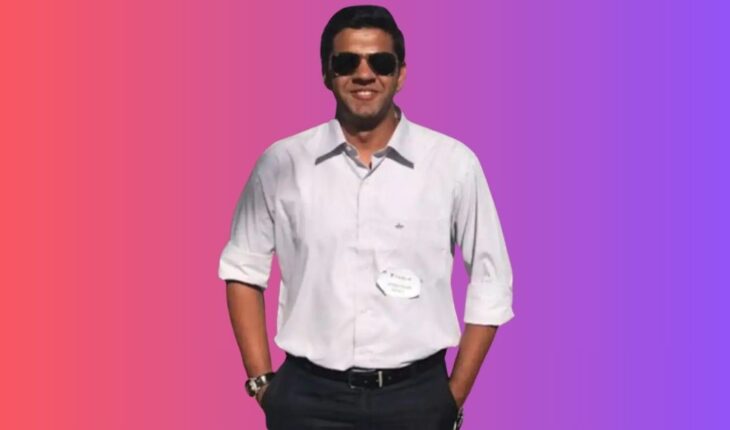
When Siddhant Awasthi announced on LinkedIn that he was leaving Tesla after more than eight years, it capped one of the company’s fastest climbs: intern to head of the Cybertruck programme, with an added remit over Model 3 by mid-2025.
He called the decision “one of the hardest” of his life and looked back on “ramping up Model 3, working on Giga Shanghai, developing new electronics and wireless architectures, and delivering the once-in-a-lifetime Cybertruck” — all before turning 30.
News coverage cast the exit as another twist in a turbulent year for Tesla. Reports noted that Awasthi had overseen the Cybertruck from engineering to large-scale production and, in July, also took charge of Model 3 — placing him at the centre of both Tesla’s most polarising launch and its core volume car.
It was a classic Tesla arc: steep learning curves, visible delivery milestones and outsized expectations.
Those expectations came with pressure. By November 2025 Tesla had weathered two major Cybertruck recalls in America — one in March for more than 46,000 vehicles over exterior panels that could detach, and another in October for over 63,000 trucks because of overly bright headlights.
Production passed 46,000 units by early 2025, yet price discounting and a fourth straight quarterly profit decline told a tougher financial story, even as revenue rose on buyers rushing to beat an EV tax-credit deadline.
Markets took the departure in their stride; Tesla shares rose roughly 3.6% afterwards, suggesting investors were focused on longer-term levers — cost, scale and the pipeline — rather than churn in a single programme.
Meanwhile shareholders reaffirmed confidence in Elon Musk with approval of a vast pay package tied to long-range targets, even as critics fretted about execution risk.
Public profiles describe Awasthi as India-born and US-educated, with the University of Cincinnati as his alma mater. He did not disclose his next move.
The timing, though, is telling. Global competition in EVs is rising; demand is uncertain; quality narratives still need stabilising.
For an operator with end-to-end programme credentials — product strategy, quality, supply chain across Cybertruck and Model 3 — the skills are highly portable: to legacy carmakers building electric divisions, suppliers moving up the stack, or start-ups fusing autonomy, manufacturing and software.
His ledger is clear enough. Under his watch Tesla took the stainless-steel fever dream of Cybertruck to a road-legal vehicle in customer hands, with output measured in the tens of thousands.
The launch was bumpy, costs are disputed and the design remains love-it-or-hate-it; the industrialisation feat is harder to deny.
Whether the truck matures into a profitable pillar or remains a cult object is now for the next team — and a market deciding how many angles it wants with its electricity.
For an engineer who “never dreamed” of leading the programme he helped ship, the next chapter is unannounced — but unlikely to be quiet.