When developers talk about “vibe coding” today, they are often talking about Cursor, the AI-assisted code editor built by Anysphere.
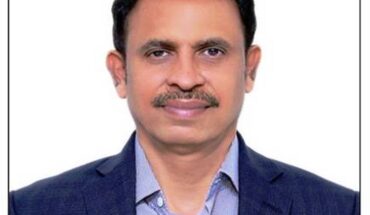
One of the four co-founders behind its rise is Aman Sanger, a Bay Area–based engineer who helped turn a student project into one of the fastest-growing developer-tools businesses in recent memory.
In late 2025, as Anysphere closed ever larger funding rounds and Cursor spread across start-ups and big tech alike, Sanger began to appear in the press as the youngest face of the founding team — part of a cohort of MIT alumni whose product-first playbook outpaced conventional marketing.
Sanger studied at MIT and co-founded Anysphere in 2022 with Michael Truell, Sualeh Asif and Arvid Lunnemark. Their early thesis was simple but ambitious: build a developer environment where AI is native, not bolted on — able to read large contexts, edit across files and collaborate with engineers as they navigate complex codebases.
That effort crystallised into Cursor, initially a fork of Visual Studio Code with deep integration of models from OpenAI, Anthropic, Google and, later, other providers.
Through 2023, Anysphere raised an $8m seed round led by the OpenAI Start-up Fund, attracting prominent angels such as former GitHub chief executive Nat Friedman and Dropbox co-founder Arash Ferdowsi.
By November 2024, reporters were already describing a bidding war among top-tier investors as usage and revenue ramped.
The inflection came in 2025. By spring, coverage was tracking Cursor’s annual recurring revenue into the hundreds of millions, and summer pieces were tying its adoption to a broader shift in how teams build software with AI assistance. In June 2025, Anysphere confirmed a $900m round led by Thrive Capital at a $9bn–$10bn valuation.
By November, a company post announced a Series D of $2.3bn at a $29.3bn post-money valuation, bringing in Coatue, NVIDIA and Google alongside Accel, Andreessen Horowitz and Thrive.
Those numbers put Cursor among the most valuable application-layer AI start-ups, with press noting usage by Stripe, OpenAI, Spotify and others.
Momentum, however, brought scrutiny. In April 2025 an AI help-desk agent, “Sam”, hallucinated a fake login policy, prompting customer cancellations before the team apologised and issued refunds. In July, changes to the $20 Pro tier triggered confusion over limits; the company rolled back the adjustments and promised refunds.
Both episodes underlined the difficulty of shipping quickly while managing AI failure modes and consumer trust — issues Sanger and his co-founders addressed publicly as they tightened processes.
If Sanger’s public profile is smaller than that of chief executive Michael Truell, his influence is visible in Cursor’s product ethos: ship tangible improvements, obsess over latency and reliability, and keep the editor close to existing developer workflows, from GitHub to terminals and tests.
Company interviews repeatedly credit word-of-mouth growth and a period of “monk mode” focus over splashy marketing, a stance that matches Sanger’s low-key online presence and the team’s engineering-first recruiting pitch.
Cursor’s feature arc in 2025 reflected that pragmatism: the team expanded long-context editing, added multi-file refactors and launched Bugbot, a paid add-on that autonomously proposes and validates fixes in pull requests — pushing Cursor beyond code generation towards reliability and CI-friendly workflows.
Inside Anysphere, Sanger represents the builder at the intersection of editor user experience and model capabilities: how agents read context, propose edits and avoid breaking builds.
The four-founder structure — Truell, Sanger, Asif and Lunnemark — helped keep product velocity high while spreading operational load.
The company’s hiring bar, including a ban on AI tools in first-round coding interviews and two-day on-site evaluations with the core team, signals an emphasis on fundamentals and cultural fit rather than hype.
That posture, public since mid-2025, reinforces the performance culture Sanger and his colleagues project.
Market coverage through late 2025 increasingly tied Sanger and his co-founders to category leadership in AI-powered coding, pointing out that heavyweights from NVIDIA to Shopify, Uber and PayPal use Cursor and that the founders’ paper wealth has soared with each valuation step-up.
Yet the more durable signal is enterprise adoption: teams standardising on Cursor for speed without abandoning review hygiene.
Indian and international outlets seized on Sanger’s age and trajectory — mid-20s, MIT-trained, and rapidly wealthy on paper — as shorthand for the new AI boom’s winners, casting him as representative of a generation building application-layer successes on top of foundation models, where distribution and product fit matter as much as model training.
Looking ahead, Sanger’s agenda is executional. On the enterprise side, the task is to make Bugbot-style reliability features indispensable in CI/CD pipelines, not merely a “nice to have” in editors.
On trust, the company will be judged on its ability to avoid repeats of the support-agent and pricing missteps and to treat transparency as a competitive moat.
On models, Anysphere aims to maintain Cursor’s model-plural stance — working with OpenAI, Anthropic, Google, xAI and others — while hardening guardrails for code safety.
And on economics, the challenge is to balance heavy-usage Pro customers with predictable, fair billing, an area where past backlash has already provided lessons.
If Anysphere continues to turn hype into retained, paying teams — and if Cursor’s reliability layer matures as quickly as its coding “vibes” — Sanger’s profile is likely to grow in step with the product’s footprint.