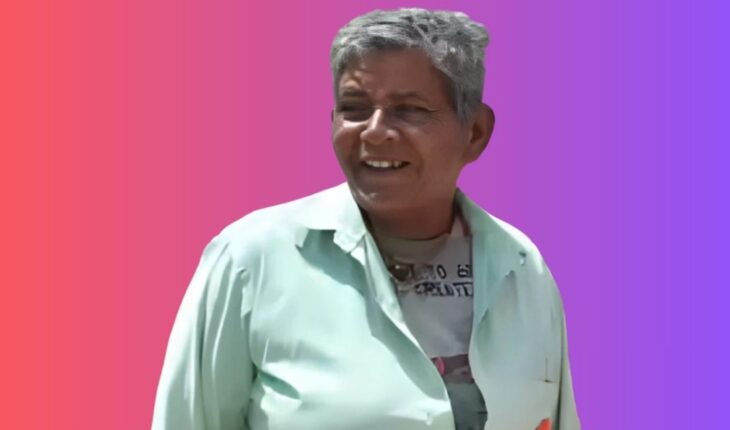
In Kattunayakanpatti, a small village near Thoothukudi (Tuticorin) in Tamil Nadu, locals long knew a hardworking man called “Muthu” or “Muthu Master” — a familiar figure at tea stalls and eateries, greeted as annachi (elder brother) with the easy respect rural India often extends to men who fit the part.
News reports later revealed a truth few around her knew: “Muthu Master” was S. Petchiammal, a woman who lived as a man for more than three decades.
It was not a bid for attention or an act of performance, but a hard-edged strategy for safety, livelihood and single parenthood in a world that repeatedly punished women without male protection.
Her life turned abruptly after an early tragedy. Reports say Petchiammal married young and was widowed within weeks; accounts differ on whether her husband died about 15 days or closer to 20 days after the wedding.
Soon after, she discovered she was pregnant and later gave birth to a daughter, Shanmugasundari.
As a young widow raising a girl, she took whatever work she could find — construction, hotel kitchens, tea shops and other daily-wage labour — while choosing not to remarry and to carry the responsibility alone.
What pushed her from hardship into reinvention was fear. News accounts repeatedly point to harassment during travel and at work, including an incident in which a truck driver allegedly stopped and harassed her on the way to her job.
Shaken, she concluded that simply moving through public space as a lone woman carried a cost she could not afford.
The shift that followed, described as deliberate and symbolic, began with a visit to the Tiruchendur Murugan Temple, where she tonsured her head, changed into a shirt and dhoti or lungi, and adopted a new name: “Muthu”.
In the telling she has given to reporters, this was not about discovering a different self; it was about constructing a shield — a way to work, commute and raise her child without being treated as prey.
Living as Muthu meant accepting a brutal bargain: more safety and social permission in exchange for constant vigilance. Reports say she worked across roles — as a cook, a painter, a farm labourer and in tea and parotta shops — until “Muthu Master” became the name people used without thinking.
The daily costs, however, were severe: the strain of guarding a secret, and the practical burdens of navigating washrooms and menstruation out of sight.
After moving to Kattunayakanpatti — by most accounts more than two decades ago — she built a life in which, for years, only close family members and her daughter knew she was a woman.
The aim was never only to survive. It was to create mobility for her child. Petchiammal, as the reports describe it, saved relentlessly and kept her mission narrow: educate her daughter, secure her future and protect her from the vulnerabilities that had shaped her own life.
Later accounts say Shanmugasundari studied, married and settled down, and that Petchiammal regarded that outcome as the point of the sacrifice.
One of the most striking elements in the coverage is what came next: even after her daughter’s marriage, she reportedly did not want to return to living publicly as a woman.
In interviews, she is described as saying that “Muthu” protected her daughter, and that she intended to remain Muthu for life. By then, the choice was not only social but bureaucratic. Reports say her male identity appears on key documents — Aadhaar, ration card, voter ID and bank records — because “Muthu” was the identity that let her function.
Yet the same state systems that require fixed categories also expose their limits: as her ability to do heavy work declined, she reportedly obtained an MGNREGS job card under a female identity, a reminder of how real lives are forced to move between rigid boxes.
The story resurfaces because it is not a neat tale of individual grit. It is a blunt commentary on enduring structures: how harassment can dictate whether women can safely exist in public at all; how presenting as male can alter wages, respect and mobility; and how single motherhood, especially with a daughter, is still policed by a culture that treats widowhood as vulnerability and “respectability” as control.
The renewed retellings in early 2026 suggest the same uncomfortable conclusion: Petchiammal’s disguise was not the anomaly. The conditions that made it necessary are.