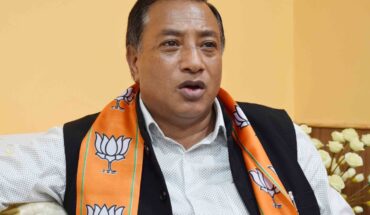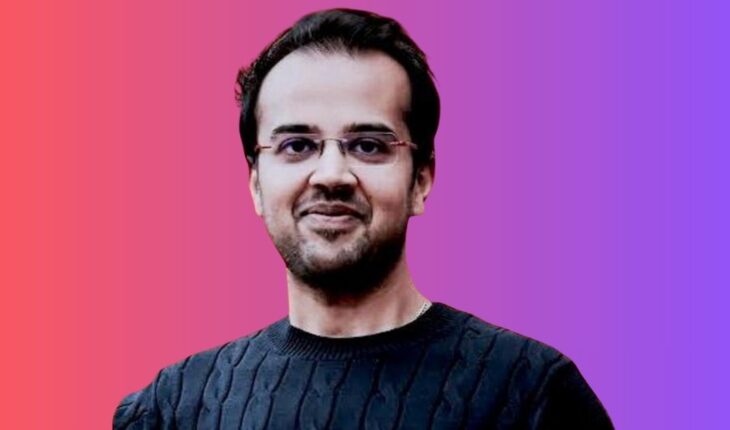
Dr Manjarik Mrinal’s public profile blends deep-technology research with a sudden turn to electoral politics.
Trained as a mechanical engineer and additive-manufacturing researcher in the United States, he later worked on semiconductor-related projects at the Indian Institute of Science (IISc) in Bengaluru before winning a seat in the Bihar Assembly from Warisnagar in 2025.
News coverage has cast him as part of a new cohort of highly educated lawmakers with STEM pedigrees, emblematic of a tentative shift in who seeks, and wins, state-level office.
Mrinal earned his PhD at the University of Texas at Arlington, publishing on thermal-fluids problems and manufacturing processes.
His Google Scholar and ResearchGate profiles list work across additive manufacturing, heat transfer and microfabrication, suggesting a career built at the intersection of materials, simulation and process engineering.
After completing his doctorate he spent a period as an adjunct professor at the University of Texas, before moving into industry research and development at HP Labs, where he worked on 3D-printed electronics and other additive-manufacturing applications.
Indian and regional media profiling his background during the 2025 campaign describe him as an IISc scientist who contributed to semiconductor-technology research, specifically defect-free optical lithography and related fabrication questions that underpin chip manufacturing.
A Malayalam news brief summarised his IISc work as part of a broader semiconductor effort, echoing a neat narrative arc of American graduate training, followed by IISc-based research, followed by politics.
A recent technical summary under his name discusses photoresist behaviour and precision patterning for metasurfaces and diffractive elements — topics closely tied to advanced lithography and the physics of micro- and nanofabrication.
Across his publications and project history, three clusters of expertise stand out. The first is additive manufacturing and printed electronics, reflected in industry-facing work linked to HP Labs and 3D-printing toolchains.
The second covers micro- and nanofabrication and lithography, including studies of thermal and mechanical instabilities in photoresists and possible pathways to mitigate defects in sub-micron patterning.
The third traces back to his doctoral formation in thermal–fluids and heat pipes, where most of his early citations are concentrated around collaborations at Arlington. Together, these strands give him an unusual familiarity with both laboratory technique and industrial process design.
In November 2025 Mrinal converted that technical profile into electoral capital, winning the Warisnagar seat in the Bihar Assembly on a technocratic plank that emphasised manufacturing, semiconductors and modernisation.
Multiple outlets highlighted his journey “from IISc scientist to legislator”, placing his campaign within a wider post-election narrative about professionals — scientists, chief executives, former civil servants — entering politics.
Election-affidavit portals list him as a 36-year-old from Samastipur district, and civil-society trackers host his 2025 candidate declarations, offering a basic snapshot of assets, education and occupation.
Local social-media posts from party workers and supporters, meanwhile, have stressed his additive-manufacturing credentials and industry experience as proof that he understands how factories and supply chains actually work.
For observers of India’s industrial policy, his story matters on several fronts. His IISc-adjacent semiconductor work maps neatly onto the country’s strategic push for chip manufacturing, and having an engineer with direct exposure to lithography inside a state legislature is unusual — and potentially useful — as states vie for electronics investments and central incentives.
His publication record and stint in corporate R&D give him credibility in public debates on technology policy, with a working grasp of both research constraints (materials, process windows, failure modes) and commercial realities (yield, cost and scale).
Mrinal has therefore become a symbol of a modest but noticeable trend. Coverage of the 2025 election repeatedly grouped him with a small cohort of “super-educated” MLAs, suggesting that at least in some constituencies there is voter appetite for candidates with formal technical training.
Whether that appetite endures will depend less on how many engineers and scientists enter politics and more on what they do once in office.
Several open questions now frame his legislative career. One is whether he can turn semiconductor rhetoric into state-level programmes — skills centres, vendor parks, or ancillary clusters around any future fabrication facilities — that produce tangible jobs and investment in and around Warisnagar.
Another is whether, as a known additive-manufacturing practitioner, he will push for pilot schemes that put 3D-printing tools into small and medium-sized firms in areas such as tooling, agricultural machinery and medical devices, where state governments can often move faster than the Union.
A third is whether he can use his IISc and American links to broker partnerships between universities and industry — internships, sponsored laboratories or applied research grants — in a state that has long struggled to build an innovation ecosystem.
How he answers these questions will determine whether his journey remains a compelling personal story or becomes a case study in how India’s lab-to-policy pipeline can work in practice.