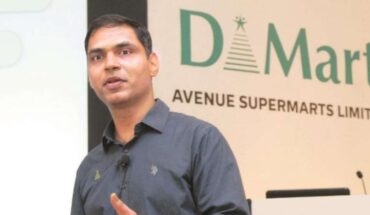
Jyoti Bansal is an India-born, U.S.-based serial entrepreneur best known for founding AppDynamics, which was sold to Cisco for $3.7 billion, and for building a new generation of enterprise software firms such as Harness and Traceable.
His companies sit at the heart of how large organisations build, ship and secure modern software, placing him among the most closely watched founders in the enterprise technology space.
Bansal grew up in Delhi and moved to the United States around 2000, reportedly on an H-1B visa, working first as a software engineer before turning to entrepreneurship.
Profiles often note how visa and immigration constraints shaped his early career, delaying his ability to start a company despite his ambitions.
He is widely reported to be an alumnus of IIT Delhi, a technical background that underpins his focus on complex, infrastructure-grade software rather than consumer apps.
In 2008 he founded AppDynamics, an application performance monitoring (APM) company built for a world of cloud computing and distributed systems.
As enterprises shifted more of their core workloads to complex, microservice-based architectures, AppDynamics offered them deep visibility into how applications behaved in production.
By late 2016 the firm had filed for an IPO, but in January 2017 Cisco agreed to acquire it for about $3.7 billion, with the deal closing in March that year.
The timing — a major sale announced just before the listing — and the scale of value created for employees and early backers turned AppDynamics into a benchmark outcome for the enterprise SaaS era.
After that exit, Bansal moved from being a single-company founder to what might be called a “builder at scale”. He set up BIG Labs, a start-up studio to incubate new ideas, and co-founded Unusual Ventures, an early-stage fund focused on enterprise software.
The model combines his operating experience with a more systematic way to back talent, experiment with concepts and refine go-to-market playbooks — a pattern increasingly common among repeat founders in Silicon Valley.
In 2017 he co-founded Harness, where he serves as chief executive. Harness aims to automate and simplify software delivery, covering continuous integration and delivery (CI/CD) and broader DevOps workflows so that engineering teams can deploy code faster and with fewer errors.
The company has grown into a significant late-stage player: in December 2025 it announced a $240 million funding round at a $5.5 billion valuation, alongside plans to expand hiring in India to tap engineering talent.
Around the same time, Bansal told reporters that Harness was on track to exceed $250 million in annual recurring revenue in 2025, signalling substantial commercial traction.
He also co-founded Traceable in 2018, a company focused on API security — an area that has become central as organisations expose more services and data through APIs and embed security earlier in the software lifecycle.
Taken together, Harness and Traceable reflect Bansal’s broader thesis that modern software teams need end-to-end tools that let them ship quickly while managing operational and security risk, especially as artificial intelligence is woven into production systems.
Bansal’s profile stands out for three reasons. First, AppDynamics remains one of the landmark enterprise software exits of its generation, especially in application monitoring.
Second, he has not stopped at one success, but gone on to build and back multiple companies in adjacent areas of software delivery and security.
Third, the continued investor support for Harness — and the strategic space occupied by Traceable — suggest that his bet on the intersection of software delivery, security and AI still enjoys strong market validation.