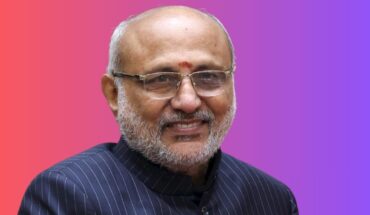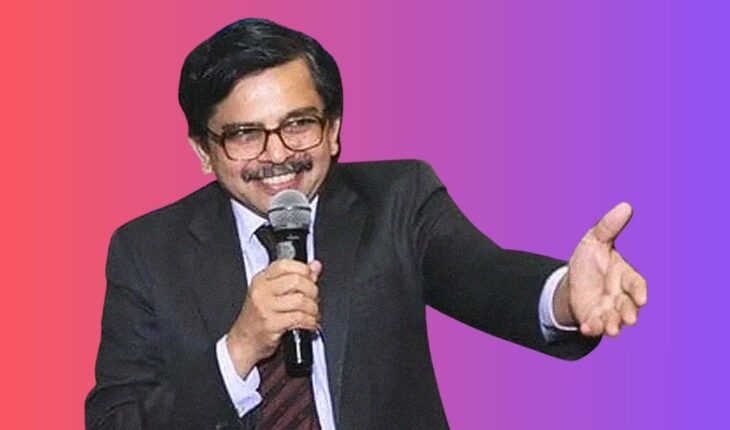
Justice Dr Srinivasan Muralidhar, one of India’s most respected rights-focused judges, has moved from the country’s higher judiciary onto the global stage after being appointed chair of the United Nations Independent International Commission of Inquiry on the Occupied Palestinian Territory, including East Jerusalem, and Israel.
The appointment, announced by UN Human Rights Council president Jürg Lauber on 27 November 2025, places the former chief justice of the Orissa High Court at the helm of a body tasked with examining some of the most politically charged allegations of violations of international humanitarian and human-rights law in recent years.
It caps a career in which Muralidhar has been described by legal commentators as a ‘devoted preserver of the rule of law’ and ‘the boldest judge the Supreme Court never had’ – a pointed reference to his widely discussed non-elevation to India’s apex court despite a long record of high-impact judgments.
Born on 8 August 1961, Muralidhar studied law at Madras Law College, where he was part of the team that won the All-India Moot Court Competition and went on to represent India at the Philip C Jessup International Law Moot Court in Washington, DC, in 1984.
He later completed an LLM in constitutional and administrative law from Nagpur University in 1990, standing first in his class, and earned a PhD from the University of Delhi in 2003 for a thesis on ‘Legal Aid and the Criminal Justice System in India’.
Alongside his early litigation work he developed a scholarly reputation in the field of access to justice; his 2004 book Law, Poverty and Legal Aid: Access to Criminal Justice, published by LexisNexis Butterworths, is regarded as a key text on India’s legal-aid framework and its gaps.
Muralidhar began practising law in Chennai in 1984 before shifting to Delhi in 1987, where he worked with the then additional solicitor general, G Ramaswamy.
Over nearly two decades at the Supreme Court of India he appeared in a wide range of constitutional and public-interest litigation, including high-profile cases arising from the Bhopal gas disaster and displacement linked to large dams.
He served as counsel to the National Human Rights Commission and the Election Commission of India, and was frequently appointed amicus curiae in death-penalty matters and other public-interest cases.
From 2002 to 2006 he was a part-time member of the Law Commission of India, contributing to law-reform deliberations while maintaining an active Supreme Court practice.
His judicial career began in May 2006, when he was appointed a judge of the Delhi High Court. Over almost 14 years on that bench he became known for detailed, socially grounded judgments spanning constitutional law, criminal justice, housing rights, gender justice and transparency.
In March 2020 he was transferred to the Punjab and Haryana High Court, shortly after a politically sensitive hearing on the 2020 Delhi riots, and in January 2021 he was elevated as chief justice of the Orissa (Odisha) High Court, a position he held until his retirement on 7 August 2023.
After retiring from the bench he was designated a senior advocate by the Supreme Court and returned to practice before it.
Muralidhar’s judicial record is studded with decisions that shaped Indian jurisprudence on fundamental rights.
In 2009 he was on the Delhi High Court bench in Naz Foundation v NCT of Delhi, which read down Section 377 of the Indian Penal Code to decriminalise consensual same-sex relations between adults in private, holding that criminalisation violated Articles 14, 15 and 21 of the Constitution.
He was also part of the full bench that held the office of the chief justice of India subject to the Right to Information Act in a case concerning disclosure of judges’ asset declarations, a landmark affirmation of transparency in the higher judiciary.
In criminal justice and accountability, his judgments were equally significant. In 2018, writing for a division bench in Zulfikar Nasir v State of Uttar Pradesh (the Hashimpura massacre case), he overturned a trial-court acquittal and convicted 16 members of the Uttar Pradesh Provincial Armed Constabulary for the 1987 killing of around 50 Muslim men, sentencing them to life imprisonment and framing the case as a grave violation of the ‘right to truth’ with explicit reference to international human-rights standards.
Later that year, in State (through CBI) v Sajjan Kumar, a bench of Justices Muralidhar and Vinod Goel reversed the acquittal of former Congress MP Sajjan Kumar, sentencing him to life imprisonment for his role in killings during the 1984 anti-Sikh riots.
The judgment characterised large-scale, targeted violence as ‘crimes against humanity’ and pointedly noted that neither ‘crimes against humanity’ nor ‘genocide’ exists as a category in Indian criminal law, urging Parliament to address this ‘loophole’.
His concern for vulnerable workers surfaced in rulings on child labour and domestic work, including a 2013 Delhi High Court decision on placement agencies that highlighted systemic failures in protecting children employed in private homes and called for stricter regulation and enforcement.
Commentators have also noted his role in decisions that strengthened women’s autonomy over reproductive choices and linked sexual and reproductive health to the right to life and dignity under Article 21, reinforcing a rights-based approach to gender justice.
Muralidhar came under a national spotlight during the communal violence in Delhi in February 2020. Sitting as a Delhi High Court judge, he conducted late-night hearings to secure safe passage and medical treatment for the injured, telling the authorities that ‘we should never allow another 1984’ – a pointed reference to the anti-Sikh pogrom.
He also heard petitions seeking the registration of FIRs over inflammatory speeches by political leaders. Shortly afterwards, a government notification formalised his transfer to the Punjab and Haryana High Court, prompting protests from sections of the Bar and sparking public debate about judicial independence and the transfers process.
As chief justice of the Orissa High Court from January 2021 to August 2023, Muralidhar was credited in legal reportage with pushing case-management reforms, strengthening access to justice and maintaining a rights-forward approach in matters ranging from environmental regulation to civil liberties.
A detailed profile on his retirement described him as combining ‘intellect and sensitivity’ and curated a long list of decisions emphasising the rule of law, accountability and the protection of marginalised communities.
His retirement at 62, without elevation to the Supreme Court, drew criticism of the collegium system from some senior lawyers and commentators, who argued that independent-minded judges with strong rights records had been passed over.
Alongside his work on the bench, Muralidhar has continued to write and teach. In addition to his book on legal aid, he has authored and co-authored numerous articles on economic, social and cultural rights, implementation of court orders in rights cases and the right to water.
He has delivered memorial lectures at institutions such as NALSAR University of Law on the evolution of the legal-aid movement in India, reflecting his long-standing interest in access to justice for the poor.
He is married to Usha Ramanathan, an independent law researcher known for her work on criminal law, privacy, technology and civil liberties.
Muralidhar’s latest role takes that rights-centred legacy into a fraught international arena. In November 2025 the UN Human Rights Council appointed him chair of its Independent International Commission of Inquiry on the Occupied Palestinian Territory, including East Jerusalem, and Israel, alongside Florence Mumba of Zambia and Chris Sidoti of Australia.
The Commission has been tasked with examining alleged violations committed in the context of the long-running conflict, including during and after Israeli military operations in Gaza since October 2023.
The Office of the High Commissioner for Human Rights notes in its official biography his nearly two decades of Supreme Court practice, his work for India’s National Human Rights Commission, his tenure as a High Court judge and chief justice, and his academic work on legal aid, framing him as a jurist with deep experience at the intersection of domestic and international human-rights law.
As the Commission’s chair, Muralidhar will now confront on a global stage the same themes that animated many of his Indian judgments: accountability for mass violence, the rights of victims to truth and justice, and the role of courts and quasi-judicial bodies in enforcing fundamental rights.
Observers in India’s legal community are watching closely to see how one of the country’s most prominent rights judges translates that legacy into international human-rights oversight at a time when both the conflict and the institutions scrutinising it are under intense political pressure.