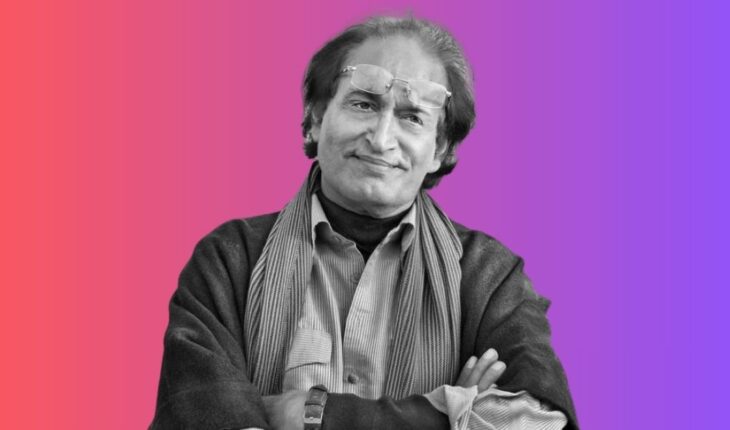
India has lost not merely a photographer, but one of its defining visual chroniclers. Raghu Rai, whose images captured war, grief, faith, politics and the poetry of ordinary life, has died in New Delhi at 83 after a prolonged illness.
His death marks the end of a career that helped shape modern Indian photojournalism.
For generations, India was often seen through his lens before it was understood through words.
An accidental beginning, a remarkable journey
Born in 1942 in Jhang, now in Pakistan, Rai did not begin as a photographer. Trained as a civil engineer, he turned to the camera in the 1960s under the influence of his elder brother, S. Paul.
An early photograph — a donkey staring into the lens, later published in The Times of London — became an unlikely beginning to an extraordinary career.
He joined The Statesman in New Delhi in 1966 and soon emerged as a singular visual storyteller. In 1977, on the nomination of Henri Cartier-Bresson, he became the first Indian invited into Magnum Photos, a milestone that signalled his arrival on the world stage.
Photographing a nation in motion
Few photographers documented India’s defining moments with such range and depth.
His camera bore witness to the Bangladesh Liberation War, the The Emergency, the Bhopal disaster, the life of Mother Teresa, and the theatre of Indian politics.
But he was drawn not only to events. He was drawn to the emotional truth within them.
His images of Bhopal remain among the starkest records of industrial catastrophe. His photographs of streets, villages and places of worship helped shape how India came to be visually understood, at home and abroad.
He photographed power and vulnerability with equal intensity.
Beyond journalism
Though rooted in reportage, Rai’s work often moved beyond journalism into art.
His black-and-white compositions had the instinct of a street photographer, the patience of a documentarian and, at times, the eye of a poet.
Over decades he produced celebrated books on India, Delhi, the Sikhs, Tibet and Mother Teresa. His exhibitions travelled widely. As picture editor at India Today during its formative years, he also helped shape visual journalism from the newsroom.
Honours followed, including the Padma Shri and numerous international awards.
Yet his standing rested less on prizes than on a body of work that compelled people to stop and look.
The eye that saw India
Rai was often called the man who photographed India’s soul. Such phrases are often used too loosely.
In his case, they seem earned.
His lens moved easily from prime ministers to pilgrims, from crowded bazaars to silent ruins, from catastrophe to transcendence.
He showed India not as spectacle, but as lived experience.
That was his gift.
A legacy beyond the frame
With his death, Indian photography loses one of its foundational figures.
But his images remain — unsettling, tender, political and alive.
Long after the shutter closed, they continue to speak.
That may be the highest achievement a photographer can hope for.
Raghu Rai did not simply take photographs.
He helped a nation see itself.