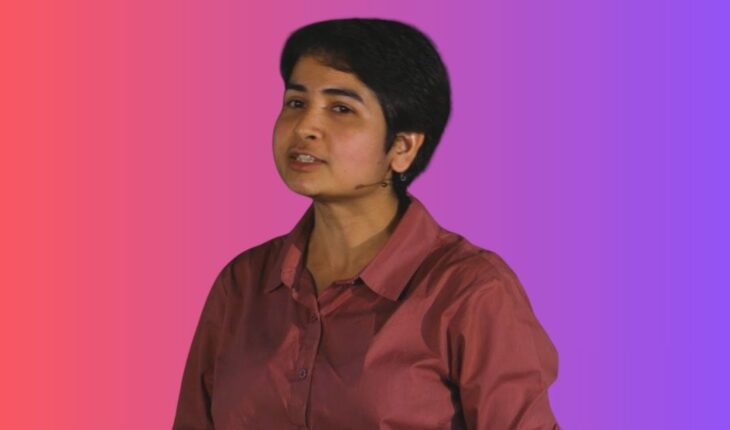
Dr Deblina Sarkar is an Indian-born electrical engineer, nanoelectronics researcher and neuroscientist who leads the Nano-Cybernetic Biotrek (NCB) Lab at the MIT Media Lab in Cambridge, Massachusetts.
An assistant professor and AT&T Career Development Chair Professor at MIT, she is known for pioneering ultra-thin quantum transistors, nanoscale biosensors and novel tools for mapping and manipulating the brain.
Born in Kolkata, West Bengal, Sarkar studied electrical engineering at IIT(ISM) Dhanbad, where she began working on nanoscale device design and spintronics.
She then moved to the University of California, Santa Barbara (UCSB), for a master’s and PhD in nanoelectronics under Professor Kaustav Banerjee, developing new transistor architectures and ultra-sensitive biosensors.
At UCSB she invented an atomically thin quantum mechanical transistor, known as the ATLAS-TFET, which broke conventional limits on power efficiency.
The work, later highlighted in Nature, has been widely cited and is often described as “defying the limit” on transistor scaling.
After completing her PhD, Sarkar joined MIT as a postdoctoral fellow in Ed Boyden’s Synthetic Neurobiology Group, working on technologies to map brain structure and function.
She became MIT faculty in 2020 and now runs the Nano-Cybernetic Biotrek Lab, which explicitly aims to “bridge nanotechnology and biology” to probe and enhance living systems.
Her work has earned numerous early-career honours, including selection as one of Science News’s “10 Scientists to Watch”, the IEEE Nanotechnology Early Career Award, an NIH New Innovator Award and recognition by MIT.nano as an “Explorer of the Nano Age”.
The research that has recently captured the most public attention, in India and abroad, is Sarkar’s development of a microscopic injectable chip system for the brain — part of a broader platform her group calls “Circulatronics”.
Recent coverage in outlets such as The Economic Times and Indian tech and science blogs describes Circulatronics as an injectable chip system made up of tiny electronic devices small enough to travel through the bloodstream, cross the blood–brain barrier, self-implant in diseased regions of the brain and then deliver targeted stimulation or sensing without open-brain surgery.
Some reports refer to these devices as “microscopic injectable chips” or “SWEDs” (often expanded in popular coverage as self-implanting wireless electronic devices), emphasising that they are designed to be minimally invasive yet capable of local action deep within the brain.
According to these accounts, Sarkar’s team has shown that such chips can be steered via the circulatory system, lodge at specific brain sites and be activated wirelessly to modulate neural activity or deliver therapy. In principle, that could allow certain brain cancers or neurological disorders to be treated without traditional surgery.
Detailed peer-reviewed papers on the full Circulatronics platform are still emerging, but the conceptual groundwork is visible in Sarkar’s earlier publications on the “Cell Rover” — a miniaturised magnetostrictive nano-antenna that functions as a wireless “cell-scale rover” inside tissue — and on organic electro-scattering antennae, soft wireless neural interfaces for multi-site recording and stimulation.
Together, these strands point to a long-term vision of autonomous, ultra-small electronic agents that can be delivered into the body, navigate to target regions and act as sensors or therapeutic tools under external wireless control.
Several features distinguish Sarkar’s injectable chip concept from more conventional neural implants or brain–computer interfaces. First is size and injectability: the devices are engineered at a microscopic scale, small enough to be introduced through blood vessels rather than via a craniotomy and direct placement on the brain.
Second is circulatory navigation: the platform is designed around the vascular system, with chips flowing through the bloodstream, traversing vascular networks and anchoring at regions of pathology — hence the Circulatronics label. Third is minimal invasiveness.
By avoiding large incisions and using existing vessels, the approach aims to reduce surgical risk, recovery time and cost, potentially making advanced brain treatments more accessible.
A fourth element is wireless communication and power. Building on the lab’s work in nano-antennas and wireless interfaces, the chips are intended to communicate and receive energy wirelessly, dispensing with bulky connectors and cables that can irritate tissue.
Finally, Sarkar’s group pays close attention to materials and device architectures that are soft, biocompatible and minimally disruptive, tackling the long-standing tension in neural engineering between rigid electronics and delicate biological structures.
Because of this combination, commentators have framed the technology as a potential paradigm shift in neurosurgery and neuro-therapeutics, while also stressing that it is at an early stage and will require extensive testing and regulatory scrutiny before clinical use.
The injectable chip, however, is only one part of a broader scientific portfolio. In quantum-mechanical electronics, Sarkar co-invented the ATLAS-TFET, a tunnelling transistor that exploits quantum effects to break traditional power-efficiency limits.
In biosensing, she developed field-effect transistor sensors using molybdenum disulfide (MoS₂) that offer markedly higher sensitivity than many earlier devices, suggesting new possibilities for label-free medical diagnostics.
Her work on the high-frequency behaviour of graphene interconnects produced detailed models showing when doped multilayer graphene can outperform copper at radio frequencies, informing the design of next-generation interconnects.
In brain mapping, she has contributed to techniques such as expansion microscopy and optical-fibre-based neural recording, allowing brain circuits to be imaged and interrogated at high resolution. Across these domains, a recurring theme is the use of physics-driven device innovation to open new paths in biology and medicine.
At MIT, the Nano-Cybernetic Biotrek Lab brings together researchers from electrical engineering, physics, materials science, biology and neuroscience.
The group’s mission is to create “nano-cybernetic” technologies that can interface electronic systems with cells and tissues at very small scales, non-invasively record and modulate brain activity, and enable new treatments for pain, cancer, and neurodegenerative and psychiatric disorders.
MIT communications highlight NCB’s work on nanoelectronic treatments for brain cancer and other “incurable” conditions, emphasising the prospect of pinpointing disease, intervening locally and sparing healthy tissue.
The injectable chip and the broader Circulatronics concept fit squarely into this vision: using nanotechnology and wireless control to reach parts of the brain that surgery cannot easily or safely access.
In India, Sarkar’s story has been widely shared under headlines such as “Kolkata-born IITian invents an injectable chip that can treat diseases without surgery”.
Social-media posts and news items present her work both as a point of national pride and as a glimpse of how Indian-trained scientists are shaping global frontiers in neuroscience and medicine.
More technical commentators have tempered the excitement with reminders that animal studies, long-term safety data and regulatory processes lie ahead before any human applications.
Even so, as coverage in Indian and international outlets has noted, Deblina Sarkar’s trajectory — from a schoolgirl in Kolkata to an IIT(ISM) Dhanbad undergraduate, UCSB PhD and MIT lab head — makes her one of the most visible Indian-origin scientists in the emerging field that blends nanoelectronics, synthetic biology and neuroscience.
The microscopic injectable chip that has brought her mainstream attention is, in many ways, a synthesis of her prior work: atomically thin devices, ultra-sensitive biosensing, wireless nanoscale antennas and a sustained drive to translate physics and engineering into less invasive, more precise medicine.