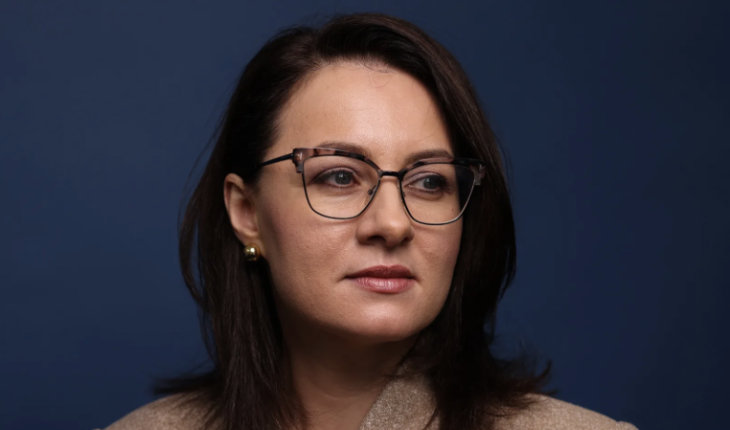
Ukraine has a wartime prime minister for the first time in five years — and her appointment signals that President Volodymyr Zelenskyy wants an economist at the heart of both battlefield logistics and the national balance-sheet.
From Chernihiv to cabinet
Born on 25 December 1985 in the northern city of Chernihiv, Yulia Anatoliivna Svyrydenko earned a master’s degree in antitrust management from Kyiv National University of Trade and Economics in 2008. After a brief spell in private finance she joined the civil service in 2011 as Chernihiv’s trade envoy to Wuxi, China, and rose through regional economic-development roles to become acting governor of Chernihiv Oblast in 2018.
Zelenskyy’s troubleshooter
President Zelenskyy brought the 34-year-old technocrat to Kyiv in 2020, first as a negotiator in the Trilateral Contact Group and later as deputy head of the presidential office. Parliament promoted her to first deputy prime minister and economy minister on 4 November 2021 — four months before Russia’s full-scale invasion.
The minerals deal that caught Washington’s eye
Her biggest pre-premiership success came on 30 April 2025, when she co-signed the US–Ukraine Reconstruction and Mineral Resources Agreement in Washington. The pact grants America preferential access to critical minerals while directing half of future royalties into a reconstruction fund, a clause credited with winning fresh bipartisan support for Kyiv. On 18 July she followed up with a draft US investment package for Ukrainian drone production.
Fast-tracked to the top
Facing front-line stalemate and a US$19 billion budget gap, Mr Zelenskyy asked parliament to endorse Ms Svyrydenko as Ukraine’s 19th prime minister. The Verkhovna Rada obliged on 17 July with a 262–22 vote. She replaces Denys Shmyhal, who moves to the defence ministry.
Immediate marching orders
In her inaugural address the 39-year-old set out a twin mandate:
- Economy – audit public finances, accelerate privatisation, slash red tape and nurture SMEs “because war leaves no room for waste”.
- Armaments – meet the president’s goal of producing half of Ukraine’s weapons at home within six months, using new US drone funding and EU co-production schemes.
“Our government charts a course toward a Ukraine that stands on its own foundations — military, economic and social,” she posted on X.
A Cabinet of loyal technocrats — and critics
The reshuffle shifts Mr Shmyhal to defence, elevates Oleksiy Sobolev (economy) and Taras Kachka (EU integration), and sends former justice minister Olga Stefanishyna to Washington as ambassador. Opposition MPs fear the line-up hands Mr Zelenskyy excessive wartime control, but European Commission president Ursula von der Leyen congratulated Ms Svyrydenko and promised “unwavering” support.
Challenges ahead
- Budget hole – further IMF tranches depend on anti-corruption reforms.
- Reconstruction – Kyiv puts war damage at US$486 billion; Ms Svyrydenko secured €11 billion in pledges at the Ukraine Recovery Conference in Rome.
- Talent drain – about six million Ukrainians remain abroad. Deregulation must lure entrepreneurs home even as the army consumes US$4–5 billion a month in matériel.
Why it matters
Only the second woman to lead Ukraine’s government, Ms Svyrydenko arrives as a deal-maker rather than a party boss. Her success in keeping donor money flowing, boosting domestic arms output and taming inflation will decide whether Kyiv can stabilise behind the lines — and sustain the fight through another brutal winter.
“Real, positive results that every Ukrainian can feel: that is the only metric,” she told MPs after the vote. With allies watching and Russian missiles still falling, Ukraine’s new prime minister has little time — and even less margin for error.