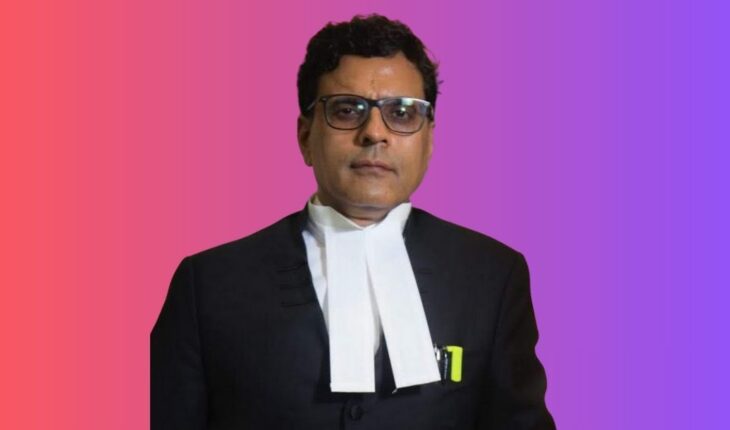
Senior advocate Vikas Pahwa has spent decades building the kind of credibility that precedes a lawyer into court. In January 2026, that credibility became the target of anonymous fraudsters — and the Delhi High Court’s response turned Pahwa into a first mover in an emerging corner of Indian law: the recognition of personality and publicity rights for legal professionals, not just celebrities.
The case that brought him into the spotlight arose from a growing impersonation scam. On January 20, 2026, Justice Jyoti Singh of the Delhi High Court passed an ex parte ad interim injunction in Vikas Pahwa v. Ashok Kumar (John Doe) & Ors (CS(COMM) 38/2026), restraining unknown persons from using Pahwa’s name, image, identity or contact details to deceive the public.
The court recorded a prima facie finding that unidentified defendants were impersonating him to lure people into fraudulent financial investments.
According to the order, the impersonator posed as a stock broker and operated a WhatsApp group titled “Technical Discussion Group for the Stock Market B12”, soliciting investments while borrowing the authority conferred by Pahwa’s reputation and recognisable public profile.
The alleged scam ecosystem extended across multiple websites and messaging platforms, prompting the court to intervene swiftly.
The injunction restrained the John Doe defendants from exploiting Pahwa’s persona on any digital platform, including social media.
It also directed the takedown or blocking of specific webpages carrying his photographs across several sites, and ordered domain registrars and hosting providers to disclose registration and identity details of the operators. Those operators were further directed to reveal information relating to the primary impersonator.
News reports described the order as unusual for a lawyer, marking one of the rare instances where a court acted to protect a legal professional’s identity against digital impersonation tied to alleged fraud.
Speaking after the ruling, Pahwa framed the issue as extending beyond personal reputation. A lawyer’s “brand”, he said, is built not through endorsements or celebrity culture but through integrity, courtroom conduct and public trust — and impersonation corrodes confidence in the justice system itself.
He also criticised the limitations of the standard notice-and-takedown model, arguing that it is too slow to deal with repeat offenders. Where identity misuse is linked to fraud, he said, speed is not a convenience but a form of harm reduction, making a case for “stay-down” obligations once content is judicially identified as unlawful.
The court order provides a concise professional portrait. Pahwa is recorded as a Senior Advocate with over 32 years of practice, designated as such in 2011, with a core focus on money laundering, anti-corruption matters, economic offences and white-collar crime.
The order also notes his work in extradition cases, treaty obligations and cross-border financial crimes, as well as his appearances in landmark matters involving multiple jurisdictions.
Importantly, the court took note of his public visibility — including professional presence across platforms — to support the argument that his name and image had acquired an independent proprietary character vulnerable to misuse.
Older legal profiles describe him as a third-generation criminal lawyer practising before the Supreme Court and the Delhi High Court, with a pop-culture footnote: an appearance as a lawyer in the 2006 film Khosla Ka Ghosla.
Beyond one individual, the order carries wider implications. While Indian courts have increasingly recognised personality rights for actors and public figures in the age of AI-driven impersonation, Pahwa’s case shifts the focus to professional identity.
Where misuse creates both consumer harm through fraud and systemic harm by eroding trust in institutions, the threshold for judicial protection may be lower.
The lesson is distinctly modern. Authority built slowly, in court, can now be copied and redeployed at internet speed.
The Delhi High Court’s order recognises that in such a landscape, the law must protect not only reputation, but the public from legitimacy that has been forged.