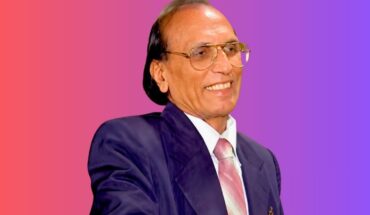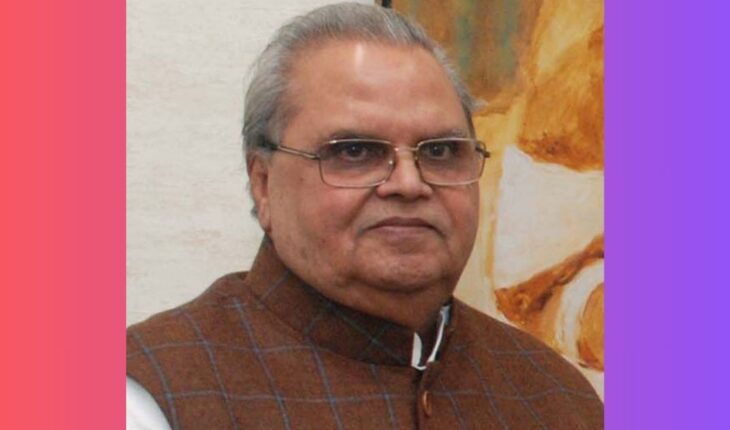
Satya Pal Malik, the last Governor of Jammu & Kashmir and a veteran of India’s shifting party alliances, died in New Delhi on 5 August 2025, aged 79. Ram Manohar Lohia Hospital said he had been in intensive care for months with complications linked to kidney disease and infection.
Mr Malik’s governorship in Srinagar (August 2018–October 2019) made him a central figure in one of independent India’s most consequential constitutional changes. He was in office when the Union government revoked Article 370 and reorganised the state into two Union territories—Jammu & Kashmir and Ladakh—on 5 August 2019. He thus became the state’s last Governor; G.C. Murmu arrived as the first Lieutenant-Governor when the post was abolished.
A career politician who began in the socialist circles of Charan Singh, Mr Malik moved through the Bharatiya Kranti Dal, Congress and Janata Dal before joining the Bharatiya Janata Party in 2004. He served two terms in the Rajya Sabha (1980–89), won the Aligarh Lok Sabha seat for the Janata Dal in 1989 and served as Minister of State for Parliamentary Affairs and Tourism in V.P. Singh’s cabinet in 1990.
His path to Raj Bhavan began in Bihar in 2017, with additional charge of Odisha in 2018. He took over in Jammu & Kashmir in August 2018 as the first career politician to hold that office in more than five decades, and later moved to Goa (2019–20) and Meghalaya (2020–22).
The Srinagar stint defined him. He dissolved the J&K assembly in November 2018 amid a storm over rival claims to form government and “fax machine” wrangles, a decision he defended as the only way to prevent horse-trading. Months later came the constitutional overhaul that tightened New Delhi’s grip on the region and recast its politics.
After leaving office Mr Malik turned into an outspoken critic of the government he had once served. He publicly backed the 2020–21 farmers’ agitation, warning against provoking rural India and even saying he was ready to quit over the issue while he was still a sitting governor. “None of the laws are in favour of farmers,” he said; minimum support prices should be given legal backing.
He also courted controversy with remarks on the 2019 Pulwama attack, alleging official lapses and saying he had been asked to keep quiet—claims that drew sharp rebuttals from the ruling party’s supporters but cemented his image as a rebel elder.
The final years brought legal headwinds. The Central Bureau of Investigation questioned him in 2023 and, in May 2025, filed a chargesheet naming him and others over alleged irregularities in the award of civil works for the ₹2,200-crore Kiru hydropower project—an affair he had himself flagged while in office. He denied wrongdoing and said he had resisted pressure to clear questionable files. The case was pending at the time of his death.
Born on 24 July 1946 in Hisawada (now in Baghpat, Uttar Pradesh), and educated at Meerut University (BSc, LLB), Mr Malik was a student leader before he won a state assembly seat in 1974. He later resigned from the Congress in the wake of Bofors and joined V.P. Singh’s Jan Morcha, which merged into the Janata Dal.
His public persona blended affability with bluntness. Admirers saw in him a rare governor who spoke his mind; detractors called him erratic. Even those who disagreed with his later sallies conceded that few Indian politicians have straddled so many phases of the Republic—from socialist street politics to the gilded rooms of Raj Bhavan—while leaving such deep footprints in Kashmir’s troubled history.
He is survived by his wife, Iqbal Malik.
Milestones
- MLA, Baghpat (1974–77); Rajya Sabha MP (1980–89); Lok Sabha MP, Aligarh (1989–91); MoS, Parliamentary Affairs & Tourism (1990).
- Governor: Bihar (2017–18), Odisha additional charge (2018), Jammu & Kashmir (2018–19), Goa (2019–20), Meghalaya (2020–22).
- Last Governor of J&K; oversaw Article 370 abrogation and state reorganisation (August 2019).
Death
- Died at RML Hospital, New Delhi, on 5 August 2025, after prolonged illness associated with kidney disease and infection. Age 79.
Notable controversies
- Dissolved J&K assembly amid “fax” row (2018).
- Farmers’ protest support and sharp criticism of the Centre (2021–22).
- Remarks on Pulwama; later named in CBI chargesheet in the Kiru hydel case, which he contested.
A loyalist-turned-maverick, Mr Malik leaves a complicated legacy: a key signature on Kashmir’s remaking; a governor who relished dissent; and a politician whose last years were spent testing the limits of candour in high office.