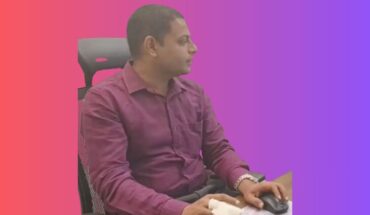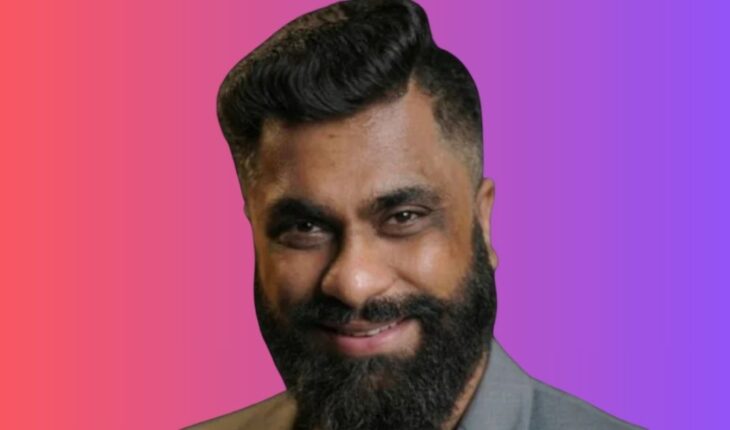
In 2018, Gaurav Kawatra appeared to have achieved the kind of corporate success many professionals spend decades pursuing. He was a director at a Chinese multinational company, earning nearly ₹5 lakh a month, living in Delhi and servicing a home loan reportedly worth ₹2 crore. Then, with only a few days’ notice, his career took an abrupt turn. He lost his job.
What might have become a story of financial distress and professional decline instead became the starting point of an entrepreneurial journey. Today, Kawatra is best known as the founder and chief executive of Infinia Solar, a renewable-energy advisory firm that describes itself as India’s first buy-side renewable-energy consultancy. The company helps industrial and commercial consumers navigate the increasingly complex transition to clean power.
His story recently attracted widespread attention after a LinkedIn post recounting his dismissal went viral. The post resonated because it challenged a deeply rooted assumption among middle-class professionals: that a high salary guarantees security. Kawatra argued the opposite. Losing his corporate position, he wrote, ultimately became the “greatest blessing” of his life.
From Corporate Engineer to Entrepreneur
Kawatra’s career did not begin in renewable energy. According to information he has shared publicly, he trained as a computer engineer before building a conventional corporate career that eventually led to senior leadership roles. His personal reflections suggest a journey marked by setbacks as well as achievements. He has spoken openly about modest academic results, middle-class beginnings and an early desire to prove himself professionally.
That determination carried him into senior management. By 2018, he had reached a position many would regard as the pinnacle of corporate success. Yet his sudden dismissal exposed the vulnerability of even highly paid executives. According to his account, the setback came at a time when he was carrying substantial financial obligations and facing intense personal pressure.
The months that followed were challenging. Kawatra has described repeated rejections during his search for new employment and growing uncertainty about the future. Yet the experience also prompted him to explore entrepreneurship more seriously.
Building Infinia Solar
In 2019, Kawatra founded Infinia Solar, focusing on a rapidly expanding segment of India’s energy economy: helping companies procure renewable power efficiently and responsibly. Unlike conventional solar developers that sell projects, Infinia Solar positions itself on the customer’s side of the transaction, advising industrial and commercial clients on procurement strategies, contracts, project evaluation and risk management.
The timing proved favourable. India was accelerating its renewable-energy ambitions, while businesses increasingly faced pressure from investors, customers and regulators to reduce carbon emissions. Companies seeking solar and wind power often encountered a maze of technical, financial and regulatory decisions. Kawatra positioned his firm as an independent adviser capable of navigating that complexity.
According to publicly available company information and professional profiles, Infinia Solar has advised on more than 150 power-purchase agreements and supported renewable-energy procurement projects measured in gigawatts. The firm works with corporate energy consumers seeking both lower electricity costs and long-term sustainability goals.
As the business expanded, Kawatra also emerged as a prominent public voice in the sector.
A Voice in India’s Renewable-Energy Transition
Through LinkedIn, YouTube and industry commentary, Kawatra has become an advocate for renewable-energy adoption. His content focuses less on environmental rhetoric and more on practical business considerations: structuring power-purchase agreements, evaluating developers, managing project risks and reducing energy costs.
This approach reflects a broader shift in India’s sustainability debate. Renewable energy is no longer discussed solely as a climate-policy issue. Increasingly, it is viewed as a business strategy with implications for competitiveness, exports and operating costs.
Kawatra’s message consistently reflects that perspective. He argues that renewable energy should be evaluated not merely as an environmental commitment but as a financial and strategic decision capable of improving long-term business performance.
Lessons Beyond Business
Part of Kawatra’s appeal lies in the way he discusses entrepreneurship. Rather than presenting success as a product of exceptional talent or luck, he often describes business as a set of skills that can be learned and refined. Management, sales, marketing and operations, he argues, are disciplines that improve through practice and experience.
That perspective resonates with many professionals confronting uncertainty in a rapidly changing economy. By openly discussing failure, rejection and career disruption, Kawatra has transformed personal setbacks into lessons about resilience and adaptation.
The Larger Significance
Kawatra’s journey reflects broader changes taking place in India’s economy. The country is witnessing both rapid growth in renewable-energy investment and a new generation of professionals willing to leave traditional corporate paths in pursuit of entrepreneurship.
On one level, his story is about a manager who lost a prestigious position and rebuilt his career. On another, it illustrates the evolution of India’s clean-energy ecosystem, where advisory expertise, financial innovation and sustainability planning are becoming as important as the technology itself.
For aspiring entrepreneurs, his experience offers a reminder that professional setbacks need not define a career. For India’s renewable-energy sector, he represents a growing class of specialists helping businesses navigate the transition towards a lower-carbon future.
In the end, the dismissal that once symbolised uncertainty became an opportunity for reinvention. Kawatra’s story is a reminder that career setbacks can sometimes open doors that success alone never would.