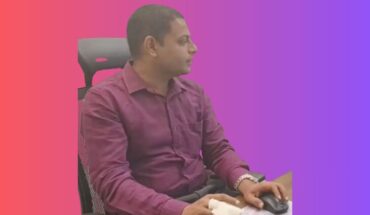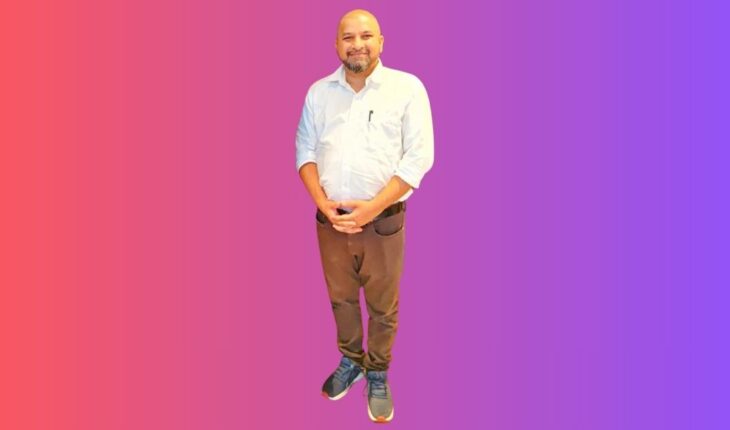
Gauravkumar “Gaurav” Kate is the founder and chief executive of Ezo Books (Ezobooks), the Navi Mumbai-based start-up behind the EZO billing machine and billing app used by tens of thousands of Indian retailers.
Built around a low-cost billing device and a multilingual mobile application, Ezo targets small shops, restaurants, wholesalers and distributors, helping them generate GST-compliant bills, manage inventory and send invoices over WhatsApp.
Over the past few years Kate has become a visible face of “dhanda-first” entrepreneurship through podcasts, YouTube talks, LinkedIn posts and start-up events, where he speaks about sales, positioning and how small businesses can use technology without fear.
Public profiles describe Kate as an alumnus of Jawahar Navodaya Vidyalaya in Washim and a B.Tech graduate from Sardar Patel College of Engineering (SPCE), Mumbai, where he studied from 2008 to 2012.
In 2023-24 he enrolled in a business leadership programme at Cornell University, adding a formal management layer to his technical training. Before founding Ezo Books he held roles that mixed engineering, product and entrepreneurship: he worked in innovation and product development at real-estate major Lodha Group, co-founded LegalDocs, a legal and compliance start-up, and later co-founded eDENTITY (Pecule Innovations).
In his talks and interviews he often frames his journey as a “rags-to-riches” story, recalling how he hustled as a student selling roses, magazines and small products before moving into technology businesses aimed at scaling into the hundreds of crore rupees.
Ezo Books, often branded simply as EZO, was founded in 2022 by Kate alongside Makarand (or Makrand) Kate and Rishikesh Sakarkar. The founding insight, as described in coverage, was straightforward.
Millions of Indian small retailers, wholesalers and restaurants still rely on manual registers or outdated legacy systems.
Many shopkeepers are not fluent in English and are uneasy with complex software. What they need are simple, inexpensive tools to digitise billing, GST compliance and inventory.
From that, the team built Ezo as a billing and accounting app for Android and the web that allows merchants to generate GST and non-GST invoices, manage stock, ledgers and transactions, and send bills and payment reminders via WhatsApp.
The app works in multiple Indian languages — English, Hindi, Marathi, Gujarati, Tamil, Telugu and others — reflecting the company’s focus on mass-market accessibility.
On the hardware side, Ezo created a line of low-cost “Bada” and “Chota” billing machines bundled with its software and sold online via the official store.
The mission is often described as building an “operating system for Indian dukaan-owners”, bringing kirana stores, cafés, distributors and small manufacturers into the digital economy without overwhelming them with enterprise-style complexity.
Public sources point to brisk early adoption. A start-up summit listing and LinkedIn updates suggest that Ezobooks has attracted around 35,000-50,000 customers across more than 600 cities and 10,000 pincodes, with the company at one point selling roughly 200 billing machines a day.
Reporting by TymeBusiness puts EZO’s revenue at around ₹4 crore in FY 2022-23 and ₹12 crore in FY 2023-24, with a target of ₹30 crore for FY 2024-25; annual losses remain modest, at a little over ₹1 crore.
The flagship EZO billing machine is priced at about ₹6,001 with a one-year subscription, with renewals reportedly costing around ₹3,000 a year.
Beyond the hardware, the company sells subscriptions to its billing and accounting app and has launched an AI marketing tool — “Dhanda – AI Marketing App by EZO” — aimed at small merchants looking for help with promotions and social-media content.
Ezo and its founders stepped into national visibility with an appearance on Shark Tank India Season 4.
The trio pitched the EZO billing machine as a way to make shop billing “super fast” and reduce leakages in small businesses.
According to multiple accounts, they sought around ₹50 lakh for 0.33% equity, implying a valuation of about ₹151 crore. During the pitch, however, the sharks questioned discrepancies in reported sales and income.
Anupam Mittal and Namita Thapar, in particular, criticised what they saw as inflated or confused figures and warned against “gadbad se paise kamana” — making money through irregular practices. No deal was offered and Ezo left the tank without funding.
The episode triggered an online debate about founder transparency, accounting discipline and the line between aggressive marketing and misrepresentation.
Subsequent commentary on LinkedIn and start-up blogs has tried to place this in context, highlighting the impact of Ezo’s tools on digitising small merchants and noting that, even without a deal, the brand benefited from national exposure and continued to grow.
Outside television, Kate has leaned into the role of public educator and storyteller.
He has appeared on Josh Talks and business podcasts under titles such as “2 saal mein 300 crore ka business”, which stress ambitious scaling goals and his journey from small hustles to tech entrepreneurship.
Ezo Books runs the #DhandeKiBaat content series, where Kate and guests discuss sales psychology, customer behaviour, pricing and day-to-day tactics for retailers.
He is a regular speaker at start-up events and summits, including the Central India Startup Summit in Bhopal, where he is positioned as a mentor on sales growth and go-to-market strategies for SaaS and SME-focused technology.
The narrative he pushes is consistent: India’s “real economy”, he argues, lies with small shopkeepers, and building products for them requires going into the market, speaking their language and designing technology that fits their realities rather than forcing corporate software into kirana stores.
As of late 2025, Ezo Books continues to operate from Navi Mumbai, selling billing machines and app subscriptions nationwide through its own Shopify-based store.
The product suite has expanded to include AI-driven marketing tools, but the core remains multi-language, low-friction billing and GST compliance.
Investor trackers list Ezobooks as a billing SaaS and SME-tech company, with Kate as one of the named founders.
Between his Shark Tank appearance, rapid revenue growth, public speaking and educational content, Gaurav Kate today sits at the intersection of SME fintech and SaaS, retail digitisation in India’s smaller cities, and a very public conversation about growth, ethics and transparency in the country’s start-up ecosystem.