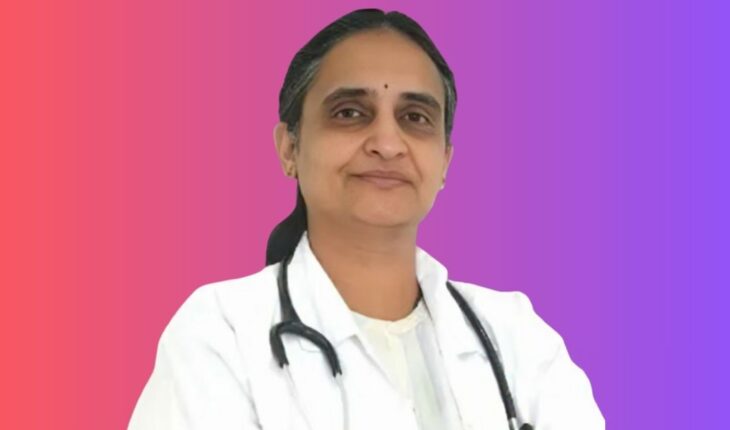
Dr Sivaranjani Santosh, a Hyderabad-based paediatrician, is being widely recognised in October 2025 as the driving force behind a major public health victory in India.
After nearly a decade of campaigning against misleading marketing of sugary drinks as “ORS” (oral rehydration solution), her efforts culminated in a nationwide crackdown by the Food Safety and Standards Authority of India (FSSAI).
On 14 October 2025, the regulator ordered states and licensing bodies to prohibit the use of “ORS” in any product name, trademark or branding unless the beverage meets the clinical formulation prescribed for medical use.
The decision addresses a persistent and dangerous loophole. For years, fruit-flavoured or energy-style drinks used “ORS” or similar acronyms (like “ORSL”) in their names, despite lacking the correct balance of glucose and electrolytes that makes ORS effective in treating dehydration.
The consequences, particularly in children suffering from diarrhoeal illness, were serious.
Many parents, misled by the branding, gave their children these drinks believing them to be therapeutic, when in fact the excess sugar and incorrect salt levels could worsen dehydration.
Dr Santosh, alongside other clinicians, repeatedly flagged the risk. FSSAI’s 2025 directive now formally closes that gap.
Her long campaign began around 2015, when she started noticing an unsettling pattern in her clinic: children with diarrhoea remained dehydrated despite receiving what parents believed to be oral rehydration drinks.
On closer inspection, these were tetra-packed beverages branded as “ORS” but lacking the clinical composition of true oral rehydration solutions.
Dr Santosh began collecting the packaging and explaining the science on social media, educating parents about how incorrect sugar–salt ratios can impair fluid absorption.
Between 2018 and 2023, she expanded her efforts through public interviews, short videos, and educational content across platforms like Instagram and YouTube.
Her posts broke down the difference between pharmacy-grade ORS and the misleading consumer products on supermarket shelves. In 2024, reports suggest the campaign escalated into a legal push through public interest litigation (PIL), putting formal pressure on the food regulator to act.
The breakthrough came in October 2025. After growing media attention and the spread of viral videos tied to her campaign, FSSAI issued its landmark directive, stating that only products meeting the WHO-recommended formulation for ORS may use the term in their branding.
Dr Santosh called the move “a people’s win,” a sentiment echoed in many of the profiles and interviews that followed.
The science behind her warnings was straightforward. Medically approved ORS contains a precise ratio of glucose and electrolytes, which facilitates the absorption of water in the intestine.
When that ratio is incorrect — particularly when the drink contains too much sugar or lacks sodium — fluid absorption is impaired. Instead of treating dehydration, these drinks can exacerbate it.
By allowing such products to use “ORS” branding, regulators had inadvertently created space for harm, especially among children. The 2025 order directly addresses this by aligning labelling rules with clinical standards.
Media coverage of her campaign has been extensive. India Today published a feature interview and video package retracing the “eight-year fight” and credited her persistence in pushing regulators to act.
The Indian Express highlighted the risks posed by misbranded drinks and explained the physiology of dehydration.
NDTV, The New Indian Express, Hindustan Times, and The Federal all ran timelines and explainers tying the new regulation to her campaign and its public health impact.
Beyond the policy shift, the campaign has had wider effects. Labelling rules have now been tightened: food and beverage companies must meet medical specifications if they wish to use “ORS” in product names or trademarks.
State authorities have been asked to monitor compliance. Public awareness has also improved.
Parents are now more likely to seek out WHO-recommended ORS powders or pharmacy-grade solutions, rather than reach for energy drinks with “ORS-like” names on the label.
Perhaps most importantly, Dr Santosh’s work is being cited as a case study in clinician-led consumer advocacy — proof that medical voices can move markets and reshape regulation.
Dr Santosh is described in profiles as a practising paediatrician with over 18 years of experience.
Based in Hyderabad, she balances clinic work with public education, often sharing simple visual guides for parents on how to identify real ORS and when to seek emergency care.
Her work exemplifies a growing movement of healthcare professionals using social media not merely to inform, but to hold industries to account. In a country where paediatric diarrhoea remains a major health concern, her victory is a reminder that science-backed persistence, even from outside the system, can shift policy — and potentially save lives.