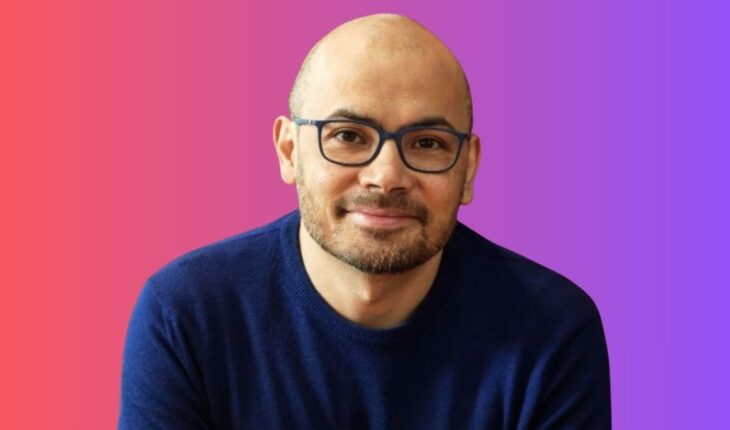
Demis Hassabis leads Google’s boldest wager: building frontier AI that is both useful and safe at global scale.
A chess prodigy turned games designer, he read for a PhD in cognitive neuroscience at UCL before co-founding DeepMind in 2010 with Shane Legg and Mustafa Suleyman.
Google bought the company in 2014 and, in April 2023, merged its Brain team with DeepMind to create a single research and product engine — Google DeepMind — under Hassabis’s leadership.
In March 2024 he was knighted for services to artificial intelligence.
His reputation rests on headline breakthroughs that changed their fields. AlphaGo’s 2016 victory over Lee Sedol signalled a step change in machine reasoning under vast search spaces.
AlphaFold went further, turning protein structure prediction into a practical tool and seeding a public database of more than 200m predicted structures.
In May 2024 DeepMind unveiled AlphaFold 3, a diffusion-based model that predicts interactions across proteins, nucleic acids and small molecules — broadening impact from folding to molecular chemistry.
The same year, Hassabis and colleague John Jumper shared the Nobel Prize in Chemistry with David Baker for work on protein prediction and design.
Hassabis has also pushed translation from lab to clinic and market. He founded Isomorphic Labs, an Alphabet sibling focused on drug discovery; in January 2024 it signed collaborations with Eli Lilly and Novartis with potential value near $3bn, aligning neatly with AlphaFold 3’s richer chemical modelling.
Inside Google, the Gemini family became the flagship of this research-to-product pipeline. Gemini 1.5 introduced dramatic long-context capabilities, and December 2024’s Gemini 2.0 set the tone for the “agentic” era.
In early 2025 Google tightened execution by moving the Gemini app team closer to DeepMind and naming Josh Woodward as product lead, a restructuring Reuters tied directly to Hassabis’s remit.
Publicly, he has argued for capability and safety to advance together. DeepMind backed government-led coordination at the U.K. and Seoul AI safety summits, which launched shared testing and evaluation work for frontier systems.
In an August 2025 interview he said AI’s impact could be “ten times bigger — and maybe ten times faster — than the Industrial Revolution”, while stressing the need for guardrails.
What changed on his watch is clear. Foundational science advanced (AlphaFold 3); a unifying model platform arrived (Gemini 2.0 and its updates); and commercial pathways grew (Isomorphic’s deals).
The competitive field — OpenAI, Anthropic, Meta, xAI — remains fierce, but Hassabis’s edge is institutional range: he can point to peer-reviewed science, shipping product and pharma-grade partnerships.
The brief ahead is executional: make agentic systems complete multi-step tasks safely; scale evaluation as models leap; and turn AlphaFold-era predictions into pipelines that satisfy clinicians and regulators.
Hassabis styles himself a “cautious optimist”, bullish on AI’s power to accelerate science and productivity yet sober about risks from misinformation to job displacement. The job, as he frames it, is to convert state-of-the-art into state-of-the-world — and to prove Google can do it, at scale and with care.