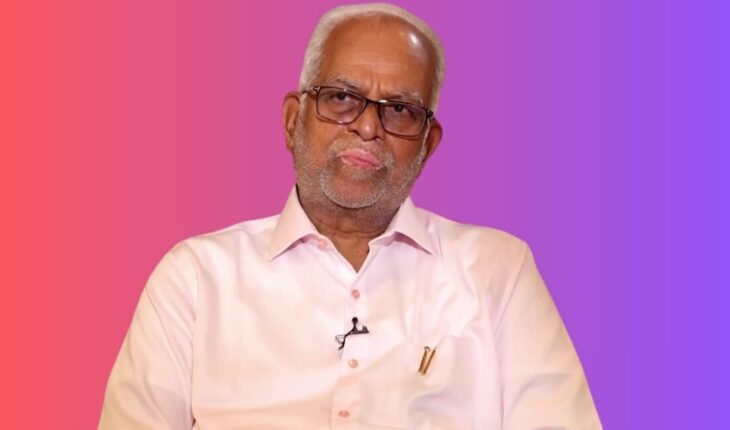
The Opposition’s I.N.D.I.A. bloc has nominated Justice (Retd.) B. Sudershan Reddy — also spelt “Sudarshan” in several reports — as its candidate for India’s Vice-Presidential election on 9 September 2025, where he will face the NDA’s nominee, Maharashtra Governor C.P. Radhakrishnan. Congress president Mallikarjun Kharge introduced Reddy as a “towering figure” in the legal fraternity on 19 – 20 August 2025. Since then, Reddy has campaigned on a pledge to uphold constitutional values and has appealed for cross-party support beyond the Opposition alliance.
What this contest is about
This is an early election prompted by the resignation of Vice-President Jagdeep Dhankhar. The Vice-President is elected by Members of both Houses of Parliament and also serves as ex officio Chair of the Rajya Sabha.
How Reddy frames the office
Reddy has described the Vice-Presidency as a “constitutional, not political” office, urging MPs to vote on merit and constitutional conscience rather than along party lines. During campaign stops in Lucknow and Ranchi he thanked leaders across parties for endorsements and said MPs outside the INDIA bloc had indicated support.
Early life and legal formation
Birth and education. Born on 8 July 1946 in present-day Ranga Reddy district (Telangana), Reddy earned an LL.B. from Osmania University in 1971 and enrolled with the Bar the same year. He practised in writ and civil matters before the Andhra Pradesh High Court, served as Government Pleader (1988 – 90) and briefly as Additional Standing Counsel for the Union government (1990).
Bench appointments. He was appointed a permanent judge of the Andhra Pradesh High Court on 2 May 1995, elevated as Chief Justice of the Gauhati High Court on 5 December 2005, and to the Supreme Court of India on 12 January 2007; he retired on 8 July 2011.
Ombudsman role. In March 2013, Reddy became Goa’s first Lokayukta; he resigned in October 2013 citing personal reasons.
What he is best known for on the Supreme Court
The Salwa Judum verdict (2011). As lead author of the judgment in Nandini Sundar & Ors. v. State of Chhattisgarh (5 July 2011), on a bench with Justice S.S. Nijjar, Reddy held the state-backed anti-Maoist vigilante militia “Salwa Judum” unconstitutional, ordered its disbanding, and barred the arming of civilian militias as Special Police Officers. The ruling has remained politically contentious: critics argue it hampered anti-Naxal operations, while retired judges have cautioned against “name-calling” and mischaracterising the court’s intent. Reddy has said his “ideology is the Constitution,” defending the judgment’s rights-based reasoning.
The “black money” case and SIT (2011). In Ram Jethmalani & Ors. v. Union of India (4 July 2011), a bench of Justices Reddy and Nijjar directed the government to constitute a Special Investigation Team to coordinate probes into illicit funds — seen as a landmark push on financial integrity.
Public roles and commissions after the court
Goa Lokayukta (2013). Appointed in March; resigned in October.
Telangana caste-survey expert group (2025). Reddy chaired the Independent Expert Working Group that analysed the State’s caste-socioeconomic survey and recommended policy levers, including a composite backwardness index, informing a 42% OBC reservation proposal now pending Presidential assent.
The 2025 campaign: messages, endorsements and debate
Reddy has campaigned on constitutionalism, fraternity and dignity, calling for a “decent and fair” contest and signalling willingness to reach out to BJP MPs. Tamil Nadu Chief Minister M.K. Stalin publicly endorsed him as a “defender of the Constitution”. The INDIA bloc announced his candidature on 19 August 2025; he filed nomination on 21 August in Parliament, flanked by senior Opposition leaders. NDA figures have criticised aspects of his judicial record, keeping his 2011 rulings in the headlines.
If elected: how his background may shape the Chair
As an ex-judge who authored widely cited constitutional orders, Reddy’s procedural temperament and emphasis on rights could influence how he guides debates and handles points of order in the Rajya Sabha. His repeated references to fraternity, dignity, social justice and federalism mirror themes from his judgments — curbing vigilantism, insisting on due process and strengthening institutional responses — though the Vice-President’s powers are circumscribed by the Upper House rulebook.
At a glance: key dates and roles
- Born: 8 July 1946; LL.B.: Osmania University (1971); enrolled at the Bar (1971).
- Andhra Pradesh High Court judge: from 2 May 1995. Chief Justice, Gauhati High Court: 5 December 2005. Supreme Court judge: 12 January 2007 – 8 July 2011.
- Landmark rulings: Nandini Sundar/Salwa Judum (5 July 2011); Ram Jethmalani/Black Money SIT (4 July 2011).
- Goa Lokayukta: March – October 2013.
- Chair, Telangana caste-survey expert group: 2025 (report submitted July 2025).
INDIA bloc VP nominee: announced 19 August 2025; nomination filed 21 August 2025; poll on 9 September 2025.