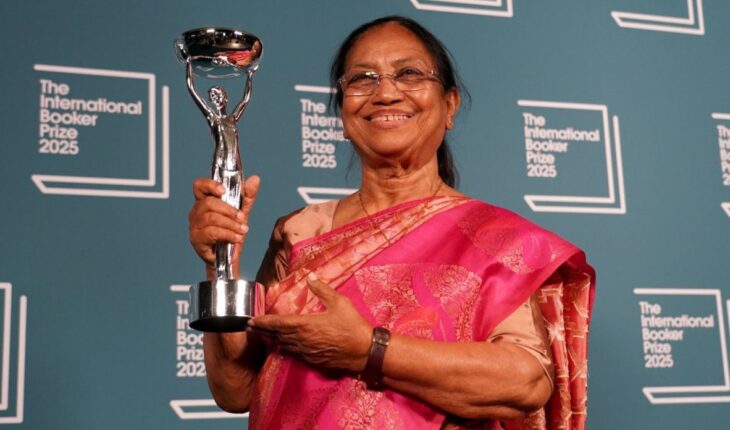
Banu Mushtaq, born on 3 April 1948 in Hassan, Karnataka, grew up in a conservative Muslim household that offered little early schooling. Illiterate until the age of eight, she mastered the Kannada alphabet in a week after shifting to a state school—an intellectual awakening she credits to her father’s quiet encouragement. That determination carried her through law studies and into journalism, activism and, eventually, a literary career that would redefine the international reach of regional Indian writing.
During the 1970s and 1980s Mushtaq joined Bandaya Sahitya (“rebel literature”), a Kannada movement that championed Dalit, feminist and anti-caste voices. One of the few Muslim women in its ranks, she filed trenchant reports for Lankesh Patrike while preparing legal briefs, seeding fiction with courtroom vignettes and grassroots observation. The blend drew censure as well as acclaim: a local fatwa and boycott in the early 2000s tried—unsuccessfully—to silence her candid portraits of Muslim women’s private struggles. Mushtaq’s response was defiant: she tore up an affidavit demanding she stop writing, declaring she would “rather face death than give up her voice”.
Since her debut collection Karinaagaragalu (1990), Mushtaq has published six volumes of stories, a novel, essays and a book of poetry, often stitching sardonic humour into tales of patriarchy, caste and quiet rebellion. Kari Nagaragalu reached a wider audience when it was filmed as Hasina (2003); translations into Urdu, Hindi, Tamil and Malayalam long preceded English publication. Yet global attention arrived only in May 2025, when Heart Lamp—twelve stories spanning 1990-2023, rendered into English by Deepa Bhasthi—won the International Booker Prize. It was the first short-story collection, the first Kannada title and the first book translated from any South-Asian minority language to take the award.
Heart Lamp showcases Mushtaq’s hallmarks: direct, oral-inflected prose and sly, proverbial punch lines that expose domestic oppression, caste inequity and the small acts of sisterhood that survive them. The title story follows a deserted wife pushed towards self-immolation; others track rural Muslim and Dalit women navigating bureaucracy, clerics and petty patriarchs. Judge Max Porter praised Bhasthi’s “radical translation”, which retains Kannada, Urdu and Arabic phrases so the English “hums” with local rhythm.
The Booker win transformed Mushtaq from a regional stalwart into an international figure. Literary circles hailed a breakthrough for Karnataka’s cultural heritage, while her British publisher, And Other Stories, braced for sales surges reminiscent of past winners. Since the announcement she has packed auditoriums from London’s Foyles to Bengaluru’s Mount Carmel College, urging students that “no story is small” and reminding women “life is bigger than today”. Delhi’s India International Centre and The Wire have hosted her for talks on multilingual storytelling.
Now 77, Mushtaq exemplifies how a late-career bloom can overturn entrenched assumptions: that the short story is a minor form, that regional Indian languages cannot travel, and that feminist protest literature lacks universal appeal. Forged in courtrooms, village squares and once-forbidden newsrooms, her fiction proves that small, bright stories can illuminate vast questions of language, justice and human resilience.