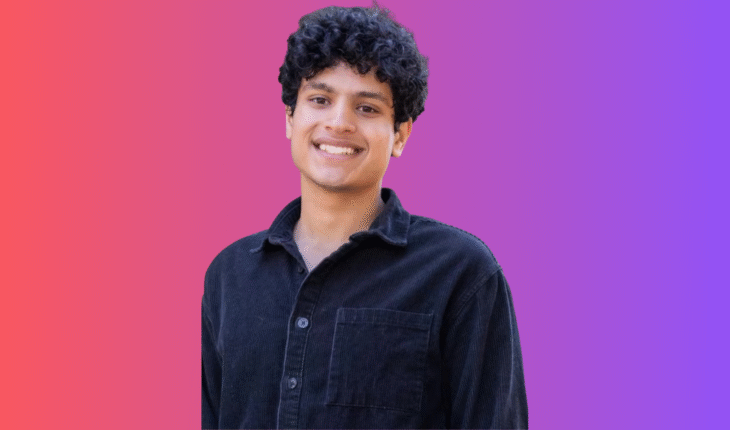
Adarsh Hiremath is a 22-year-old Gen-Z entrepreneur who has gone from Harvard classroom to Silicon Valley boardroom in record time, emerging as one of the world’s youngest self-made billionaires thanks to his AI start-up, Mercor.
Born to Indian-origin parents and raised in California’s Bay Area, he attended Bellarmine College Preparatory, where he met his future co-founders Brendan Foody and Surya Midha.
The trio made a name for themselves on the American high-school debate circuit, reportedly becoming the first team to win all three major national policy debate tournaments in the same year — an early sign of the intensity and discipline that would later define their start-up journey.
Hiremath enrolled at Harvard University but later dropped out, choosing the start-up path over an Ivy League degree.
He and his friends secured Thiel Fellowships, a prestigious programme that offers young founders $100,000 on the condition that they leave or skip college to build companies.
In interviews, he has said that without Mercor he “would still be in college”, underscoring how sharply his life diverged from the traditional academic route.
In 2023, Hiremath, Foody and Midha founded Mercor, initially as a platform to connect freelance programmers — especially from India — with American tech companies.
They built AI tools to interview and evaluate developers at scale, using automation to make hiring faster and more merit-based.
The company soon pivoted into a far more explosive opportunity: human-in-the-loop AI training.
Mercor now recruits a global network of around 30,000 expert contractors, including engineers, doctors, lawyers, bankers, consultants and journalists, and uses them to train, test and challenge frontier AI models for clients such as leading Silicon Valley AI labs.
These experts label data, design tricky prompts, check model outputs and provide structured feedback, giving AI systems richer, more reliable training signals than simple crowd-sourced annotation.
As chief technology officer, Hiremath leads this technical backbone: designing evaluation workflows, optimising how human experts interact with models and positioning Mercor as a critical supplier in the AI supply chain — an infrastructure layer for companies such as OpenAI and Anthropic that need large-scale, high-quality human feedback.
By late 2025, Mercor’s platform was generating around $500m in annual recurring revenue and had become one of the best-known names in specialist AI data work. A major growth inflection came after Meta’s investment in rival Scale AI created demand for alternative providers of high-end data annotation and evaluation — a gap Mercor rushed to fill.
In October 2025, Mercor announced a $350m Series C funding round from prominent investors including Felicis, Benchmark and General Catalyst, valuing the company at $10bn. That valuation translated into billion-dollar personal stakes for each of the three founders.
Forbes, Bloomberg and other outlets reported that Hiremath, Foody and Midha — all aged 22 — had become the world’s youngest self-made billionaires, beating the record previously set by Mark Zuckerberg, who first appeared on billionaire lists at 23 in 2008.
For Hiremath, who described the moment as “surreal”, the milestone came with a sharp contrast: “I would still be in college if I hadn’t founded this company,” he told The Economic Times.
Instead, he now finds himself a Gen-Z face of the AI boom, featured in Forbes 30 Under 30 for AI and singled out in global coverage of the new billionaire class created by frontier AI.
Though often introduced as a Harvard dropout, Hiremath is very much a Silicon Valley insider.
Public profiles note stints with Thiel Capital and IBM, as well as involvement in university-linked consulting and research roles before he focused fully on Mercor.
This blend of elite academic exposure, venture-capital networks and technical credibility has positioned him as a bridge between big-tech AI labs and the global pool of specialists who train their models.
On social media, he leans into a clean, work-heavy persona rather than the stereotypical flashy billionaire lifestyle.
Reports describe the three co-founders as working long hours, keeping their spending modest and ploughing most of their attention back into Mercor’s growth rather than yachts and private jets.
Mercor’s meteoric rise has not been without controversy, and Hiremath’s profile now carries the kind of scrutiny that often shadows young tech moguls.
In November 2025, People and other outlets reported dissatisfaction among some of Mercor’s contract workers after the company allegedly cancelled a large AI project and re-offered roles at lower hourly pay, dropping rates from around $21 to $16 and reducing expected work hours.
Contractors claimed that the changes contradicted earlier expectations that the project would last through December and provide stable income.
Mercor defended its decisions as standard practice in project-based businesses, stating that it remained committed to transparent communications and long-term, sustainable earning opportunities for workers.
The episode highlighted the tension between billion-dollar valuations at the top and gig-style precarity at the bottom — a theme likely to follow Hiremath and his peers as they scale.
In the global imagination, Hiremath now sits at the crossroads of several powerful narratives: a Harvard dropout who chose building over studying; a Thiel Fellow who used that bet against college to create real value; a Bay Area child of Indian origin who turned debate-team camaraderie into a multibillion-dollar AI enterprise; and a Gen-Z technologist whose personal wealth is inseparable from ethical questions about gig work, AI training and the future of labour.
As AI reshapes entire industries, Mercor’s business model — and Hiremath’s decisions as CTO — will be watched closely by investors, regulators, AI researchers and workers alike.
Whether he becomes a long-term builder in the mould of a Bezos or a short-lived symbol of the AI funding boom will depend on how well he and Mercor balance hypergrowth with responsibility, and whether their claim to be “fuelling smarter AI” can coexist with fair treatment for the thousands of humans behind the models.