In the age of social media, political movements can emerge not from party offices or public rallies but from a single post on X. Few examples illustrate this better than Abhijeet Dipke, the political communications professional whose satirical Cockroach Janta Party (CJP) has become one of India’s most talked-about online phenomena of 2026.
What began as a joke about unemployment and political alienation quickly evolved into a viral digital movement that attracted tens of thousands of supporters, widespread media attention and engagement from sitting politicians.
The rise of Dipke and his unlikely political creation reveals much about contemporary India. It reflects the frustrations of a younger generation, the enduring power of political satire and the ability of social media to transform an offhand remark into a national conversation.
From Political Communications to Viral Politics
Before the Cockroach Janta Party entered public discourse, Abhijeet Dipke was already known in political and digital communication circles. Various reports identify him as having worked in social media and political campaign operations, including associations with the Aam Aadmi Party’s digital outreach efforts. His familiarity with online messaging, meme culture and political storytelling appears to have helped shape the movement’s rapid growth.
Now based in Boston, Dipke did not intend to launch a conventional political organisation. According to interviews given after the campaign went viral, the original idea was conceived as satire rather than a serious political project. Yet the public response exceeded expectations. Within days, a humorous membership drive had accumulated tens of thousands of sign-ups across social-media platforms.
Understanding that response, however, requires returning to the controversy that sparked the movement.
The Remark That Sparked a Movement
The origins of the Cockroach Janta Party lie in a controversy surrounding remarks attributed to Chief Justice of India Surya Kant during court proceedings. Social-media users interpreted comments about unemployed youth as comparing them to “cockroaches”, triggering criticism and debate online. Although clarifications later emerged regarding the context of the remarks, the phrase had already acquired a momentum of its own.
Dipke responded with a tongue-in-cheek call to action.
If unemployed, frustrated and perpetually online young people were being labelled “cockroaches”, he suggested, they might as well organise themselves. The result was the Cockroach Janta Party — a deliberately absurd political platform claiming to represent “the voice of the lazy and unemployed”.
The message resonated. Within 48 hours, membership surged into the tens of thousands. By May 2026, reports suggested the movement had crossed 80,000 sign-ups, making it among the most rapidly growing satirical political campaigns on Indian social media in recent years.
Satire with a Serious Message
At first glance, the Cockroach Janta Party resembles a meme page posing as a political organisation. Its language is playful, its branding intentionally humorous and its membership criteria frequently tongue-in-cheek.
Beneath the humour, however, lies a more serious critique.
The movement taps into anxieties surrounding unemployment, economic uncertainty, political representation and institutional trust. Many young Indians connected with its sarcastic messaging because it articulated frustrations they already felt but rarely saw reflected in mainstream political discourse.
Its five-point manifesto, while partly satirical, addresses issues such as political accountability, electoral integrity, media responsibility and women’s representation in politics. The combination of humour and substantive commentary helped distinguish it from countless other internet trends.
A Gen-Z Political Phenomenon
Observers have described the Cockroach Janta Party as one of the clearest examples of Gen-Z political expression in contemporary India. Unlike traditional parties built through organisational structures and regional networks, CJP emerged almost entirely through digital culture.
Its growth reflected a distinctly online form of political participation in which memes replaced speeches, social-media threads substituted for meetings and digital sign-up forms took the place of conventional membership drives.
The movement’s rapid spread demonstrates how younger audiences increasingly engage with political issues through humour, irony and shareable content rather than traditional campaigning.
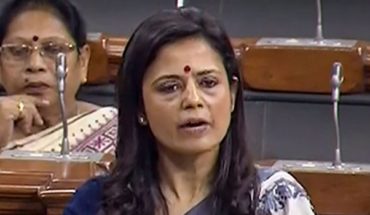
Its visibility increased further when politicians and public figures, including MPs Mahua Moitra and Kirti Azad, publicly interacted with the campaign online, drawing national media attention to what might otherwise have remained a niche internet joke.
Yet growing visibility also raised a larger question: was the movement merely a joke, or had it become something more?
Beyond the Joke
Perhaps the most revealing aspect of Dipke’s story is his own surprise at the campaign’s success.
In interviews, he has acknowledged that he never anticipated such a large response. What began as a satirical reaction to a controversial comment evolved into a platform through which thousands expressed dissatisfaction with political institutions and economic realities.
Whether the Cockroach Janta Party remains a digital protest, develops into a sustained advocacy platform or eventually fades as an internet moment remains uncertain.
What is already clear, however, is that Dipke has demonstrated an increasingly important reality of modern politics: influence no longer depends solely on organisational strength or electoral machinery. A compelling narrative, a sharp sense of humour and a sophisticated understanding of digital culture can sometimes mobilise public attention faster than traditional political campaigns.
The Larger Significance
For India’s political class, the rise of the Cockroach Janta Party is more than an amusing social-media story. It highlights the frustrations of a generation navigating unemployment, economic pressure and political disillusionment while spending much of its public life online.
For Dipke, meanwhile, it marks an unexpected transformation — from political communicator to the face of one of India’s most unusual viral political movements.
In a country where politics is often serious, hierarchical and carefully choreographed, the Cockroach Janta Party succeeded by doing the opposite. It embraced satire, self-mockery and internet humour.
In doing so, it offered a reminder that in the digital age satire can become a form of political mobilisation — and that some of the loudest protests begin as jokes.