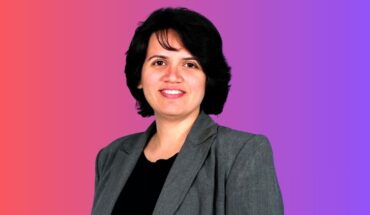
Vandana Luthra is best known as the founder of VLCC, one of India’s most recognisable home-grown names in beauty and wellness.
She opened the first centre in New Delhi in 1989, combining diet, exercise and dermatology-grade treatments when the category scarcely existed in India.
Over the next three decades VLCC expanded across South Asia, the Gulf and parts of Africa, evolving into a multi-country platform spanning clinics, personal-care products and training institutes.
Born on 12 July 1959 in New Delhi, Luthra studied at the Polytechnic for Women and later trained in Europe in nutrition, beauty and skin care, an origin she has repeated in interviews and official biographies.
She launched VLCC with a “holistic” proposition — weight management alongside skin and hair treatments — well before “wellness” entered mainstream Indian retail.
By the 2010s VLCC had become a network business, with clinics, branded products on retail shelves and VLCC Institutes to train therapists and nutritionists. International moves, including a Kenya joint venture in 2014, signalled ambitions beyond Asia.
As the company grew, so did Luthra’s profile: she was named to Forbes Asia’s Power Businesswomen in 2016, appeared often in Fortune India’s Most Powerful Women lists and received the Padma Shri in 2013 for services to trade and industry.
Skills development has been a constant theme in her public work. In 2014 she became the first chair of the government-backed Beauty & Wellness Sector Skill Council, set up to standardise and expand vocational training and certification — an institutional bridge between fast-growing private demand and formal employment.
After exploring an IPO in 2021, VLCC changed tack. In January 2023 Carlyle acquired a majority stake in partnership with the founders, in a deal widely reported at about $275m–$300m for roughly 70%, with the Luthras retaining a significant holding and brand-building role.
Contemporary notes cited more than 300 locations across a dozen-plus countries, and Carlyle has since pushed product expansion and tighter operating discipline.
Talk of a (re)listing resurfaces from time to time, but as of mid-November 2025 there is no confirmed public offer; VLCC continues to be tracked on unlisted markets and IPO calendars, which should be treated as reports rather than regulatory facts.
Beyond the business, Luthra is often linked to NGO work, including KHUSHII and the Amar Jyoti Charitable Trust, and to governance roles tied to the Ministry of Skill Development & Entrepreneurship and the Morarji Desai National Institute of Yoga — areas that echo her focus on employability, especially for women and first-time entrants to the workforce.
Day-to-day leadership has been professionalised under private-equity ownership, but Luthra remains Founder and Mentor across brand and skills initiatives, and is still the public face most associated with VLCC’s origin story and promise of “scientific wellness”.
With a scaled clinic network, consumer products and institutes — and a sponsor pressing for sharper execution — the next phase is less about proving demand than about operating leverage: product efficacy, digital funnels, clinical outcomes and expansion beyond India’s metros.