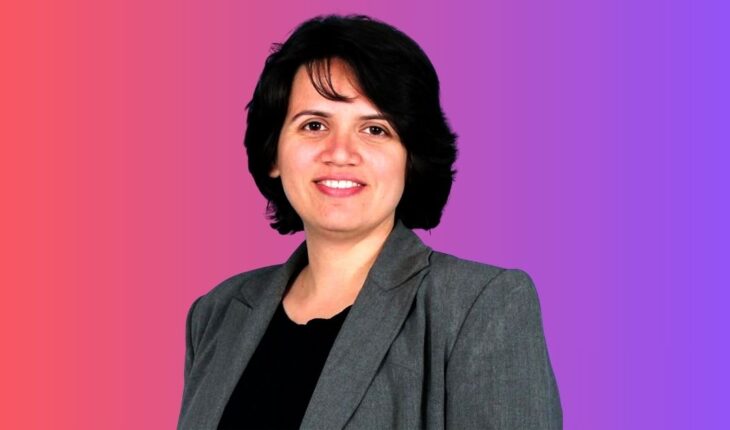
Upasana Rupkrishan Taku is the co-founder and, since 2024, the main public-facing CFO/COO voice of MobiKwik, one of India’s longest-running consumer-payments and credit platforms.
A Stanford-trained engineer, she began her career in the United States with roles at HSBC Auto Finance in San Diego and later at PayPal in Silicon Valley.
In 2009 she returned to India to co-found MobiKwik with Bipin Preet Singh, helping to build one of the early digital-wallet players long before UPI reset the payments landscape.
Under her watch, MobiKwik has travelled from wallet pioneer to listed fintech. After shelving a planned flotation in 2021, the company re-filed its papers in January 2024 and finally went to market in December that year with a fully fresh-issue IPO.
The offer became one of the most oversubscribed of 2024, with investors bidding around 120 times the shares on sale — roughly $4.7bn in demand for a $67m raise.
The listing signalled renewed appetite for profitable, mid-cap fintech stories and placed Taku firmly in the spotlight as the custodian of the firm’s numbers and narrative.
The centrepiece of that narrative was profit. Through 2023-24 Taku told public markets and the media a disciplined story: tighten unit economics in payments, keep take-rates and margins in check, and use lighter-risk credit to complement rather than distort the wallet business.
In the year to March 2024 MobiKwik posted its first full-year profit — ₹14 crore in PAT on revenue of ₹875 crore — flipping from losses a year earlier.
By mid-FY25, the company was still stressing margin expansion in payments and a measured approach to lending, positioning itself as a rarity in Indian fintech: a growth platform willing to forgo a land-grab in favour of sustainable economics.
Operationally, the business she oversees now spans three broad lines: consumer payments (wallets, UPI, cards and device-led acceptance), financial services (Zip buy-now-pay-later and other pay-later products, plus personal-loan partnerships) and merchant acquiring through its gateway arm Zaakpay.
Ahead of and after the IPO, Taku repeatedly pointed to a sharp rise in MobiKwik’s share of the prepaid-wallet market — from roughly 11-12% in March 2024 to about 20-23% by early FY25 — as the firm leaned into niches where wallets beat UPI’s thin margins, such as recharges, bill payments and online micro-transactions.
Product strategy and policy navigation sit at the core of her brief. Zip, MobiKwik’s BNPL/pay-later offering, is pitched as small-ticket, short-tenor credit in the ₹1,000-₹60,000 range, originated by partner non-bank lenders.
Coverage has tracked Zip to around 4.8m eligible users, with disbursals deliberately moderated to stay aligned with the Reserve Bank of India’s tightening of digital-lending norms.
In early 2025 MobiKwik announced a full launch of e-rupee (CBDC) use-cases after the RBI opened pilots to non-banks, signalling that the platform intends to remain policy-aligned and willing to experiment.
Investor material around the IPO, meanwhile, described MobiKwik as one of India’s largest wallet players by PPI transaction value, with over 160m registered users and more than 4.2m merchants.
The story has not been without setbacks. In March 2021 researchers and media outlets alleged a major data breach at MobiKwik, claiming that sensitive user information had been exposed.
The company denied the allegations even as the RBI ordered a forensic audit, and the episode soon became a case study in crisis communications in Indian fintech.
Business press followed both the regulator-mandated review and MobiKwik’s combative public stance closely, with Taku often acting as the firm’s voice during a period when trust and governance were under scrutiny.
Over time her role has shifted from founder-operator to markets-facing finance chief.
Early on, Taku focused on building bank partnerships and the merchant network; by late 2024 most interviews and roadshow accounts identified her as co-founder and CFO, responsible for explaining the firm’s strategy to regulators and investors.
She has consistently argued that prepaid wallets can be economically attractive when anchored in sticky, daily-use categories, and that credit must be grown within tight risk and compliance guardrails rather than used as a blunt tool for boosting volumes.
Her background helps to explain that stance. Taku holds a master’s degree in Management Science and Engineering from Stanford and worked in product roles at PayPal during the formative years of online consumer payments, as well as in analytics at HSBC Auto Finance in America.
That mix of payments “plumbing” and credit-risk exposure is visible in how MobiKwik balances its product mix between low-margin payment flows and higher-yield but regulated lending.
Offer documents list her as a promoter alongside Bipin Preet Singh and two family trusts, a standard governance detail that gained prominence during the IPO as investors scrutinised control and alignment.
With the listing complete and profitability established, Taku’s near-term agenda is about execution rather than reinvention.
On payments, the task is to defend wallet share and deepen merchant monetisation even as UPI-driven price compression continues.
On credit, it is to keep Zip’s unit economics tight under ongoing RBI scrutiny of digital lending, while building optionality through the group’s non-bank finance arm as policy allows.
On market optics, the challenge is to sustain quarterly growth without eroding the margins that won investors’ trust in 2024.
Recent filings and coverage point to continued capital being channelled into the NBFC subsidiary to strengthen lending rails — one of several levers that will determine how far the MobiKwik story, and Taku’s own as its financial face, can run in the next phase.