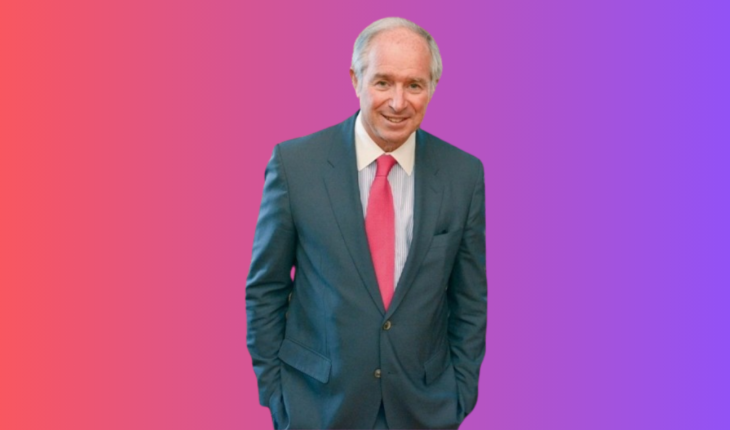
Stephen A. Schwarzman is best known as the co-founder, chairman and chief executive of Blackstone, one of the world’s largest alternative-asset managers. Yet in recent years his public identity has been shaped as much by philanthropy as by finance.
Having built Blackstone into a $1 trillion-plus global platform across private equity, real estate, credit and insurance, Schwarzman has increasingly focused on how private wealth can shape public institutions during a donor’s lifetime.
Schwarzman began his career in investment banking, including at Lehman Brothers, before launching Blackstone in 1985 with Peter G. Peterson. Under his leadership, the firm evolved from an advisory boutique into a diversified alternatives powerhouse.
Its strategy rested on raising long-dated capital, broadening investment products and institutionalising global fundraising. That financial architecture generated both scale and stability — and, ultimately, the personal wealth that now underwrites Schwarzman’s philanthropic ambitions.
His giving has been deliberate, high-profile and institution-focused. The centrepiece is Schwarzman Scholars at Tsinghua University in Beijing, a fully funded global scholarship programme designed to rival the Rhodes Scholarship. It aims to cultivate future leaders with a deeper understanding of China and to promote cross-cultural dialogue at a time of geopolitical strain.
In the United States and Britain, Schwarzman has made landmark gifts to elite universities. At the Massachusetts Institute of Technology, his donation helped establish a new college dedicated to computing and artificial intelligence.
At the University of Oxford, a major contribution created the Schwarzman Centre for the Humanities. In each case, his philanthropy has targeted areas — technology, leadership and the humanities — that shape long-term intellectual and geopolitical influence.
Schwarzman’s career has not been free of controversy, including criticism of past political remarks and advisory roles.
But recent coverage has increasingly framed him as part of a generation of financiers intent on “giving while living”: deploying capital at scale to build institutions, define agendas and secure a legacy beyond the markets that first made their fortunes.