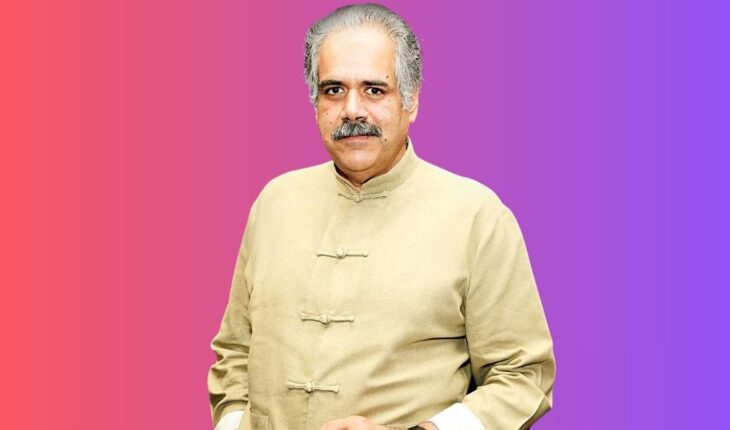
Rahul Bhatia is the co-founder and long-time controlling promoter behind IndiGo, India’s largest airline by market share, and the group managing director of InterGlobe Enterprises, the diversified travel and aviation company that incubated it.
Though he keeps a relatively low public profile compared with many Indian corporate leaders, he has been one of the most consequential figures in Indian civil aviation over the past two decades – first as an airline-services entrepreneur, then as the architect of IndiGo’s scale-up, and more recently as the dominant promoter at the centre of a high-profile co-founder split.
Bhatia founded InterGlobe in 1989, initially focusing on air-transport management before expanding into a broader range of aviation-adjacent businesses including airline management, logistics, pilot training, maintenance, repair and overhaul (MRO), and hospitality.
The group’s own profile notes that he holds a bachelor’s degree in electrical engineering from the University of Waterloo in Canada, a technical background that fed into a systems-driven, operational approach to building travel businesses.
A widely cited long-form profile in Forbes has described how he built InterGlobe by concentrating on execution, partnerships and the “unsexy” plumbing of aviation and travel – capabilities that later proved critical when IndiGo began to scale while keeping costs tight.
In 2006 Bhatia co-founded IndiGo with veteran airline executive Rakesh Gangwal. The airline quickly became synonymous with a particular operating playbook: a single-type fleet, high aircraft utilisation, a sharp focus on punctuality and a network strategy built around scale and discipline rather than glamour.
These choices helped IndiGo dominate India’s fast-growing domestic market and turn a notoriously difficult business into a rare commercial success story.
On paper, Bhatia’s influence is also visible in the way InterGlobe and its promoter entities have remained central to the ownership and governance of InterGlobe Aviation, IndiGo’s listed parent. InterGlobe Enterprises has consistently been described as the airline’s top shareholder, with Bhatia as the key promoter-managing director figure alongside Gangwal.
That partnership, however, eventually deteriorated into one of corporate India’s most closely watched promoter disputes. Over time, differences between Bhatia and Gangwal spilled into the open and turned into a years-long shareholder battle over governance and control. Gangwal resigned from the board and began exiting his stake in phases.
Subsequent market filings and deal coverage have repeatedly referred to the “bitter” nature of the split, and to the gradual unwinding of the original co-founder pairing.
The fall-out has played out in the equity markets. On Gangwal’s side, there have been successive block deals in which he and his family trust sold down their holdings, including a planned sale of around 3.3% in March 2024, even as they remained among the largest non-promoter shareholders.
On InterGlobe’s side, a 2% sale in June 2024 marked the first reduction in more than four years, though the group still retained the single-largest stake.
Together, these transactions have shifted IndiGo’s shareholder profile from a tight promoter duopoly to a more institution-heavy structure, even as Bhatia remains the primary promoter linked to the airline’s parent group.
Bhatia’s story, however, extends beyond IndiGo itself. InterGlobe presents itself as an integrated aviation and travel platform, with businesses across airline support services, hospitality, logistics, training and maintenance – an ecosystem that mirrors the industrial-scale mindset behind IndiGo’s operations.
In recent years the group has also begun placing bets on what it sees as the next phase of mobility, including a partnership with US-based Archer Aviation to bring electric air taxis to India. Such moves suggest that Bhatia is positioning InterGlobe not only to benefit from traditional air travel growth but also to participate in emerging aviation technologies.
His enduring significance in Indian aviation stems from this combination of tight operational discipline, ecosystem-building and capital-market influence.
IndiGo’s culture of execution, InterGlobe’s web of aviation services and the prominence of promoter stake moves in the market have all made Bhatia a reference point for how Indian promoter-led companies can scale in a complex, heavily regulated sector.
The long tail of the IndiGo co-founder feud has also ensured that his name is closely associated with wider debates on governance, shareholder rights and the balance of power between promoters and public investors in India’s listed companies.