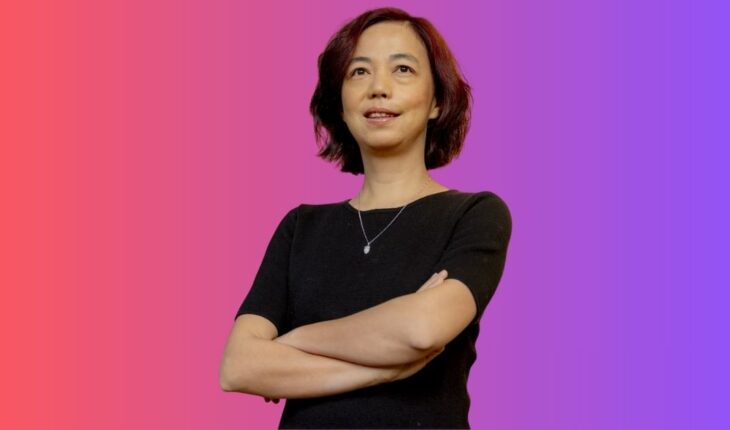
Fei-Fei Li is one of the few researchers whose work has reshaped an entire field and then travelled into boardrooms and policy rooms.
A Chinese-American computer scientist and Sequoia Capital Professor at Stanford, she co-directs the university’s Institute for Human-Centred Artificial Intelligence (HAI), the campus hub that links research, education and policy around “AI that improves the human condition”.
Born in Beijing in 1976, Li immigrated to the United States at 15, helping her parents run a dry-cleaning shop in New Jersey while finishing school. She studied physics at Princeton, graduating in 1999, and went on to earn a PhD in electrical engineering at Caltech in 2005.
Her early training spanned computer vision and the neuroscience of vision, a combination that later shaped her approach to machine perception. After postdoctoral work, she joined the Stanford faculty, becoming a central figure in the university’s AI ecosystem.
Li’s signature contribution is ImageNet, the massive labelled image dataset she launched with collaborators in the late 2000s to break computer vision’s data bottleneck.
Containing millions of annotated images across thousands of categories, ImageNet underpinned the ImageNet Large Scale Visual Recognition Challenge, the benchmark competition that defined the field for years.
In 2012, AlexNet — a deep convolutional network by Alex Krizhevsky, Ilya Sutskever and Geoffrey Hinton — crushed the competition, a result widely seen as the start of modern deep-learning dominance in vision.
Li has often described that moment as the point at which big data, GPUs and better algorithms finally converged.
Her influence is not confined to academia. In 2017–18 Li took leave from Stanford to serve as Chief Scientist of AI/ML at Google Cloud and as a Google vice-president, pushing the idea of “AI for every developer and business” through tools such as AutoML and other platform features.
Her stint overlapped with the company’s controversial Project Maven contract with the US Department of Defense, which fuelled internal protests about the use of AI in warfare and was eventually not renewed.
Throughout, Li stressed a “human-centred” vision for AI and publicly distanced herself from weaponisation of the technology, before returning to Stanford in late 2018.
Back on campus, Li co-founded Stanford HAI with former provost John Etchemendy to fund interdisciplinary research, policy work and teaching.
The institute has channelled tens of millions of dollars into cross-disciplinary projects and produces the annual AI Index, a widely cited attempt to track the field’s progress and risks.
In parallel, she co-founded AI4ALL in 2017 to widen access to AI education for under-represented students — an early, highly visible effort backed by philanthropies and technology firms to diversify the next generation of AI talent.
Li has also become a public voice on AI’s trajectory. Her 2023 memoir, The Worlds I See, intertwines her immigrant story with the evolution of modern AI from data-starved curiosity to global platform technology.
The book doubles as a primer on how scientific insight, compute and labelled data produced the ImageNet moment, while warning about gaps in inclusion and governance. Universities have adopted it for common-reading programmes, and reviewers have highlighted its clear-eyed account of both AI’s promise and its limits.
In 2024 Li stepped back into entrepreneurship, raising about $230m for World Labs, a company building AI that can understand the three-dimensional physical world — what she calls “spatial intelligence”.
The aim is to move beyond today’s text- and image-first models towards systems that can perceive, reason and act more reliably in robotics, augmented and virtual reality, and other embodied settings.
With top venture firms and strategic investors from chipmakers on its cap table, World Labs instantly became one of the most closely watched AI startups.
As generative AI leapt into the mainstream, Li’s role widened from lab leader to policy interlocutor.
She testified to the US Senate in 2023 on governing AI, arguing for public-interest computing — especially academic infrastructure — and for risk frameworks grounded in evidence rather than hype. In February 2025 she opened Paris’s AI Action Summit, urging governments to “govern on science, not science fiction”, a line that quickly became shorthand for her pragmatic stance.
Across her interviews and essays, three themes recur. First, data and measurement: Li’s work shows how better datasets and shared benchmarks can catalyse breakthroughs — and then expose biases that must be confronted.
Second, human-centred design: she argues that AI should augment human dignity, capability and agency, not replace or diminish them.
Third, plural development: she calls for stronger public-sector and academic capacity so that AI’s benefits are not captured solely by a handful of firms or countries.
Beyond hundreds of scholarly papers and heavily cited datasets, Li has been elected to leading US academies in engineering, medicine and the arts and sciences, and regularly appears on global influence lists.
The press often tags her as AI’s “godmother”, a nod to her role in seeding today’s vision systems and mentoring a generation of researchers and founders.
As the next wave of AI shifts from predicting the next token to acting in the real world, her lifelong preoccupation with perception — and her insistence on human-centred, openly measured progress — explain why she still sits close to the centre of the debate.