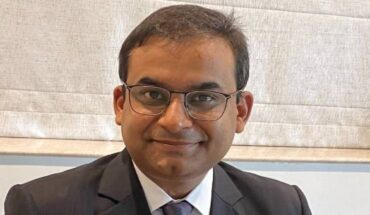
Dr Niranjan Hiranandani is one of India’s most recognisable real-estate developers and an enduring industry voice.
As co-founder and managing director of the Hiranandani Group, he is closely associated with integrated townships such as Hiranandani Gardens in Powai and Hiranandani Estate in Thane. Long a fixture on rich lists, he remains an active spokesperson for the sector.
The year 2025 has been a pivot. On 5 June a special court in Mumbai closed criminal proceedings linked to the long-running Powai Area Development Scheme after the state Anti-Corruption Bureau filed a closure report finding no evidence of corruption or conspiracy.
The court held that prolonging the case would not serve justice. In October Hiranandani was elected chairman of NAREDCO, the real-estate apex body under the housing ministry, placing him at the centre of policy debates on approvals, financing, the Real Estate (Regulation and Development) Act, real-estate investment trusts (REITs), infrastructure investment trusts (InvITs) and urban reform.
Deal flow has kept pace. House of Hiranandani has acquired a little over one acre in Andheri East, signalling renewed bets on commercial real estate along Mumbai’s east–west transit corridors.
Separately, Hiranandani Communities has said it is in talks to develop four five-star hotels in Alibaug, extending the group’s reach into leisure hospitality near Mumbai.
The Group’s brand was built on large, mixed-use townships that bundle homes with offices, retail, schools and healthcare.
Over the past decade the family and affiliated platforms have diversified into operating assets that ride India’s consumption and cloud-compute growth, notably digital infrastructure through Yotta’s data-centre parks and industrial and warehousing ventures.
The tilt from pure development to long-run operations mirrors the maturing of India’s property market.
Prominence has brought scrutiny as well as plaudits. Hiranandani has been a regular on Forbes and Hurun wealth rankings.
His name surfaced in the Pandora Papers in 2021 in connection with offshore trusts. He attributed the relevant assets to his son. That episode did not result in prosecution, and the separate Powai matter has now been closed by the court.
Beyond building townships, he has been a steady presence in industry bodies — earlier with MCHI-CREDAI and ASSOCHAM, now at NAREDCO — arguing for faster permissions, better infrastructure linkages and a deeper mortgage and REIT market.
His new policy perch gives him a broader platform on goods-and-services-tax input credits, the ease of doing business in building approvals, rental housing and urban renewal.
Born in Mumbai in 1950 and trained as a chartered accountant, he built the business with his brother, Surendra Hiranandani, before branching into distinct ventures under the wider family banner.
The Powai township launched in the mid-1980s is widely cited as a template for mixed-use urban planning and for raising design and amenities standards in suburban Mumbai.
This profile matters now because the legal cloud over Powai has lifted, the NAREDCO chairmanship amplifies his policy influence and the project pipeline — from city commercial parcels to hospitality — remains visible.
As India’s property market navigates higher interest rates, an infrastructure push from metros to coastal roads, and growing demand for grade-A offices, branded housing and data-centre capacity, Hiranandani’s choices will continue to signal where the sector is headed.