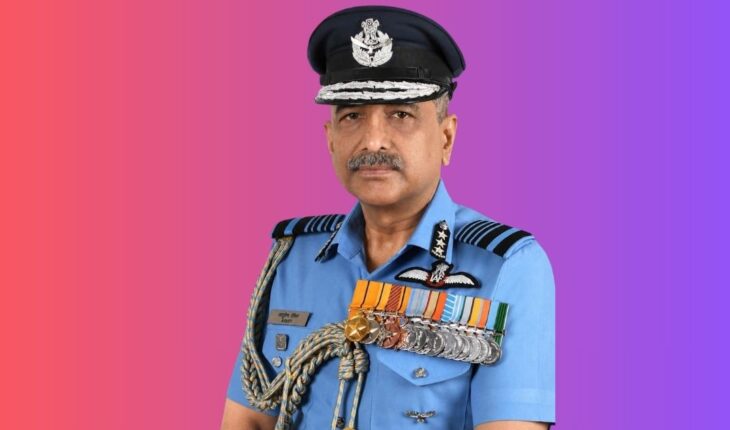
Air Marshal Ashutosh Dixit, a fighter pilot with nearly four decades of service and operational experience stretching from the Kargil conflict to Operation Sindoor, has been appointed the next Chief of the Air Staff.
He will take over as the 29th Chief of the Indian Air Force, in the rank of Air Chief Marshal, on the afternoon of October 31st 2026, succeeding Air Chief Marshal Amar Preet Singh, who retires the same day.
The appointment places at the head of the IAF an officer whose career has combined frontline flying, experimental test flying, operational command and defence planning. He takes charge as the service seeks to modernise its combat fleet while expanding its use of indigenous aircraft, drones, missiles and networked systems.
Born on December 9th 1966, Dixit was commissioned into the fighter stream of the IAF on December 6th 1986. He is an alumnus of the National Defence Academy, the Defence Services Command and Staff College in Bangladesh and the National Defence College.
He has accumulated more than 3,500 hours of flying experience across a varied range of aircraft, including the Mirage-2000, several MiG variants, Kiran, Jaguar, IL-78, Hawk and Tejas. He is also an Experimental Test Pilot and a Qualified Flying Instructor.
From Kargil to Operation Sindoor
Dixit’s operational experience spans different phases of India’s recent military history.
He participated in Operation Safed Sagar, the IAF’s air campaign during the 1999 Kargil conflict, as well as Operation Rakshak. More recently, he was involved in Operation Sindoor. The Defence Ministry lists all three among the operations and exercises in which he has taken part during his service.
His career has also included a wide range of command and staff assignments. As commanding officer, he re-equipped No. 9 Squadron with Mirage-2000 aircraft. He later commanded a frontline fighter base in the western sector and a leading fighter-training base in the south.
At Air Headquarters and elsewhere, he served as Directing Staff at the Air Force Test Pilots School, Principal Director of Air Staff Requirements, Air Defence Commander of Southern Air Command, Assistant Chief of the Air Staff for Projects and Plans, Senior Air Staff Officer at South Western Air Command and Deputy Chief of the Air Staff.
Those assignments gave him experience not only of flying and field command but also of procurement, capability planning and the development of future air-power requirements.
Experience in joint military planning
At higher command level, Dixit served as Air Officer Commanding-in-Chief of Central Air Command before becoming Chief of Integrated Defence Staff to the Chairman, Chiefs of Staff Committee.
As CISC, he worked on greater jointness and integration among the Army, Navy and Air Force. The Defence Ministry says several joint doctrines and orders were issued during his tenure and initiatives were developed to strengthen joint capabilities across the armed forces.
He took over as Vice Chief of the Air Staff on July 1st 2026, succeeding Air Marshal Nagesh Kapoor.
His experience at Integrated Defence Staff is particularly relevant as India pursues closer co-ordination among the three services and considers how future operations should combine air, land, maritime, cyber, space and unmanned capabilities.
A fighter pilot looking towards drones and missiles
Colleagues quoted by The Indian Express describe Dixit as soft-spoken, balanced, grounded and highly comfortable with technology. His public remarks also offer some clues to the questions that have occupied him as a senior commander.
He has argued that conventional combat aircraft cannot be considered separately from newer capabilities such as drones and missiles. He has also pointed to Operation Sindoor as an example of how technology is changing the relationship between distance and vulnerability, increasing the importance of real-time surveillance and situational awareness.
That interest is not merely theoretical. In September, as Vice Chief, Dixit inaugurated the IAF’s first Dronathon, an initiative designed to test emerging unmanned systems under realistic operational conditions. The IAF described unmanned aircraft as an important complement to manned aviation.
His association with indigenous aircraft programmes adds another dimension. Dixit has flown the Tejas, while his work in test flying, air-staff requirements and planning has given him experience at the intersection of operations and technology.
The challenges awaiting the next Air Chief
Dixit will take command of an Air Force facing several demands at once: maintaining combat readiness, replacing ageing aircraft, adding indigenous platforms and weapons, expanding unmanned capabilities and improving integration with the other armed services.
His background — as fighter pilot, test pilot, instructor, commander and strategic planner — has exposed him to most of those areas.
His service has been recognised with the Vayu Sena Medal in 2006, Vishisht Seva Medal in 2011, Ati Vishisht Seva Medal in 2023 and Param Vishisht Seva Medal in 2026.
When he assumes command on October 31st, the central question will be how the IAF under his leadership balances its traditional strength in manned combat aviation with the growing importance of drones, precision weapons, surveillance networks, indigenous technology and joint operations.
Dixit’s career has prepared him for that transition. His tenure will show how he chooses to manage it.